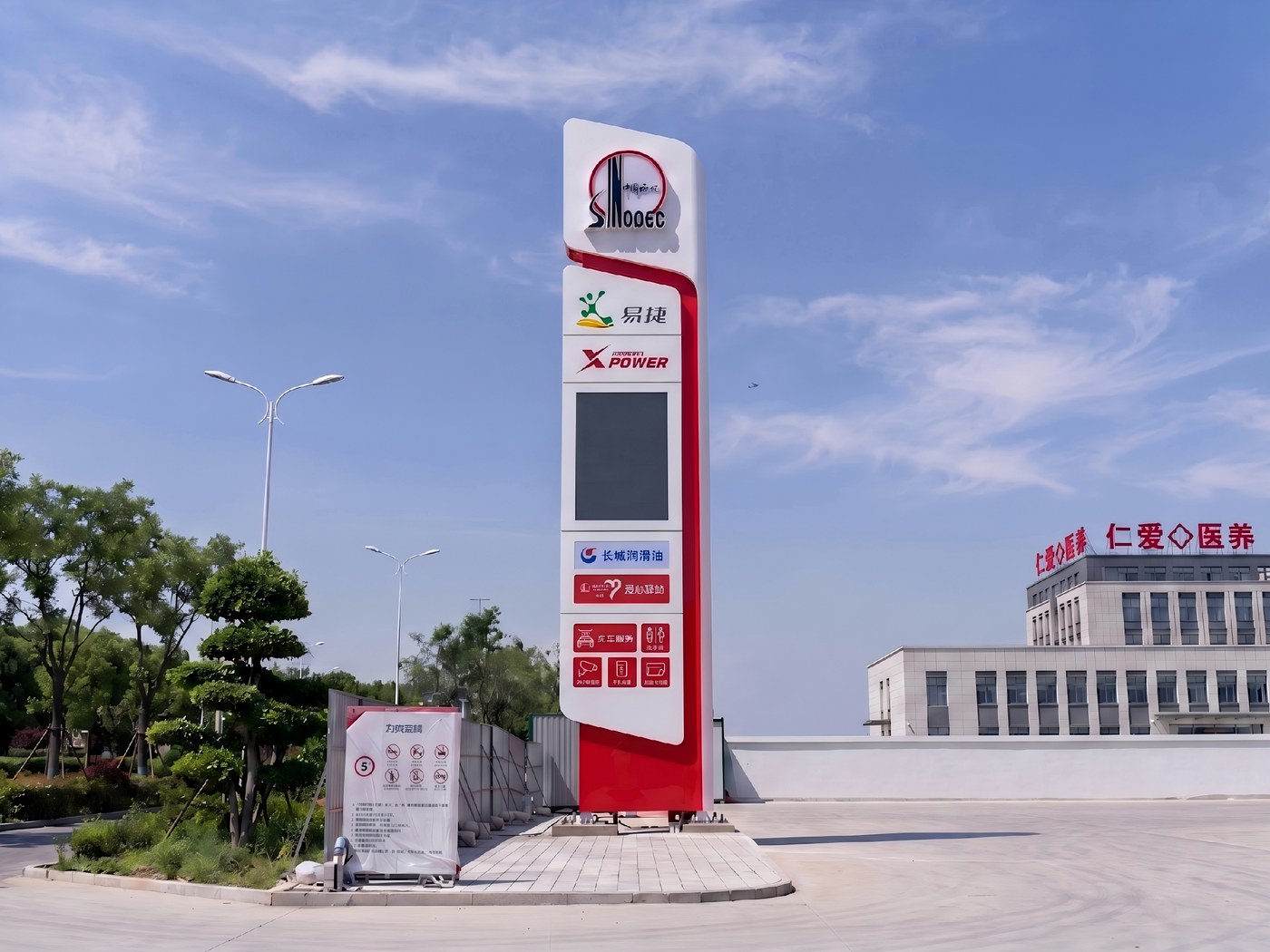
A 9-metre pylon with an 18 m² face carries roughly four tonnes of horizontal force in a 120 mph gust — and a base moment measured in tens of tonne-metres. "It looks strong" is not a design method.
The honest answer to what wind speed should a forecourt pylon be designed for is the site's mapped basic wind speed under ASCE 7 — roughly 90–105 mph inland across much of the US, and 130–150 mph along the Gulf and Atlantic coasts, Risk Category II. Design to that number, name it in the tender, and every other decision — pole diameter, plate thickness, bolt grade, foundation size — follows from it. That discipline is standard on BIGDIPPER SIGN pylon programs.
1. How does the wind load actually add up?
Pressure, times area, times a shape factor — then a long lever arm. The ASCE 7 chain for the canopy fascia wind load calculation for signage and pylon design alike starts with velocity pressure: qz = 0.00256 × Kz × Kzt × Kd × V², in psf. Run a coastal site at 120 mph with Exposure C, Kz ≈ 1.13 at 9 m and Kd 0.85, and qz comes out near 35 psf. A solid sign face takes a drag coefficient Cf of 1.2–1.4, so design pressure lands around 45 psf.
• 18 m² face ≈ 194 sq ft × 45 psf ≈ 8,700 lbf — about 4 tonnes pushing sideways.
• Base moment — force × lever arm (roughly 22 ft to the face centre) ≈ 190,000 ft-lb, or about 26 tonne-metres at the foundation.
• Canopy fascia follows the same chain with uplift: over 100 m² of fascia at 35–45 psf, the uplift fights the roof dead load — clips and fixings, not the sheet, are the failure point.
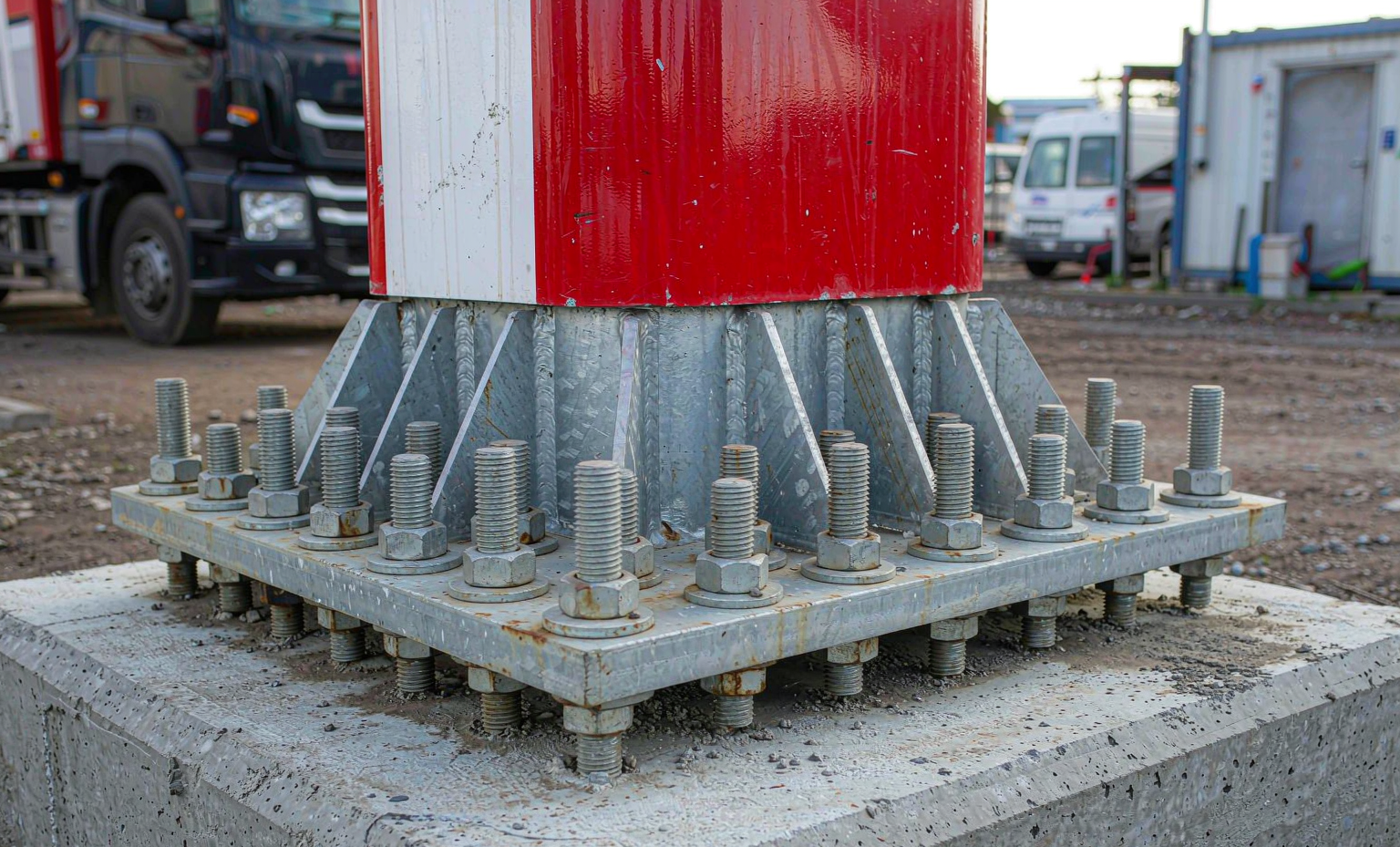
Pylons almost never fail in the pole body. They fail at the joints: anchor bolts in tension, the weld between pole and base plate, and the cabinet-to-pole connections on multi-panel stacks. A design that specifies bolt grade, torque and weld inspection — not just "galvanized steel pole" — is the one that survives the storm it was sold for.
The number surprises buyers because 18 m² sounds modest until it is called what it is: a billboard on a stick. Two field reference points. Redesigning a 9 m pylon from a 105 mph to a 140 mph site typically adds one bolt diameter and modest steel weight — hundreds of dollars on paper, if it is done before fabrication. And the pylons that come down in storms almost always come down at hardware bought to a price instead of a grade, which is why BIGDIPPER SIGN, as a China manufacturer for fuel retail programs, ships bolt grade and torque on the drawing rather than in an email.
✅ Bottom line: An 18 m² face at 45 psf is about four tonnes of side load — the pole rarely fails, so the tender buys bolt grade, weld inspection and a named wind speed.
2. Who checks the numbers, and what does a stamp cost?
The factory supplies the engineering package; a locally licensed engineer stamps it. Most US permitting offices require calculations sealed by a PE licensed in that state, so budget the pylon sign structural engineering stamp cost up front: typically $600–2,500 per design and one to two weeks, less if the fabricator's drawing package is already complete.
What to demand from the factory so the stamp is a formality instead of a fight:
• The design wind speed named on the drawing — a number, not "high wind resistance".
• Stated assumptions — exposure category, Kz, Cf and the face area they were applied to.
• An anchor bolt schedule — diameter, grade, embedment and torque, plus a foundation drawing matched to a soil bearing class.
• Weld and bolt inspection points listed on the drawing, so the site crew knows what gets checked before the cabinet goes up.
A site's mapped speed takes five minutes on the ASCE 7 Hazard Tool with the site address — do that before the tender, write the speed into it, and no bidder can quietly design to a milder wind. This is also the cheapest moment to fix a spec: changing V from 100 to 140 mph on paper costs a bolt diameter; changing it after the pole is fabricated costs a pole.
✅ Bottom line: Design to the site's mapped ASCE 7 wind speed, put the number in the tender, and treat a four-tonne side load as the reason anchor bolts and base welds get their own inspection lines.
FAQ
Q: What wind speed should a forecourt pylon be designed for?
A: The site's mapped basic wind speed from ASCE 7 (Risk Category II) — about 90–105 mph across much of the inland US and 130–150 mph on the Gulf and Atlantic coasts. Look it up by address on the ASCE 7 Hazard Tool, write that number into the tender, and make every supplier design to it; "hurricane rated" is a marketing word, not a load case.
Q: Does face size matter more than pylon height?
A: Both, differently. Force grows linearly with face area — the same arithmetic a canopy fascia wind load calculation for signage uses for uplift, only reversed — while height raises the pressure coefficient slightly and — more importantly — lengthens the lever arm, so a taller pylon turns the same force into a bigger base moment. Cutting face area is usually the cheaper relief than shortening the pole — or ask your OEM supplier for a perforated face design, which sheds wind load the solid face cannot.
Q: Can the Chinese factory's calculations be stamped directly?
A: The package can be, the paper cannot — a US-licensed PE must seal it. Anhui Bigdipper Sign Co., Ltd. supplies the full calculation set (speed, assumptions, bolt schedule, foundation drawing) so the local engineer reviews and stamps instead of redoing the work, which is where most of the stamp fee goes. The pylon sign structural engineering stamp cost also drops on repeat designs — a program pylon amortizes one review across many sites.
BIGDIPPER SIGN offers a free structural pre-check: send the site address, pylon height and face size, and our engineers return the mapped design wind speed, a force and moment estimate and an anchor bolt schedule ready for your PE — the same package used across our pylon and outdoor signage line and our 300-station national VI rollout. As a China OEM/ODM factory for fuel retail signage, BIGDIPPER SIGN puts the numbers in the drawing, not in the brochure — and every pre-check starts by answering what wind speed should a forecourt pylon be designed for, from the map, before any steel is ordered. Contact us to start the pre-check.
Published: November 2026 | By BIGDIPPER SIGN Engineering Team
www.bdpsigns.com
Anhui Begedipai Signage System Co., Ltd.