Why ICU Teams Need a Dedicated Infant Radiant Warmer
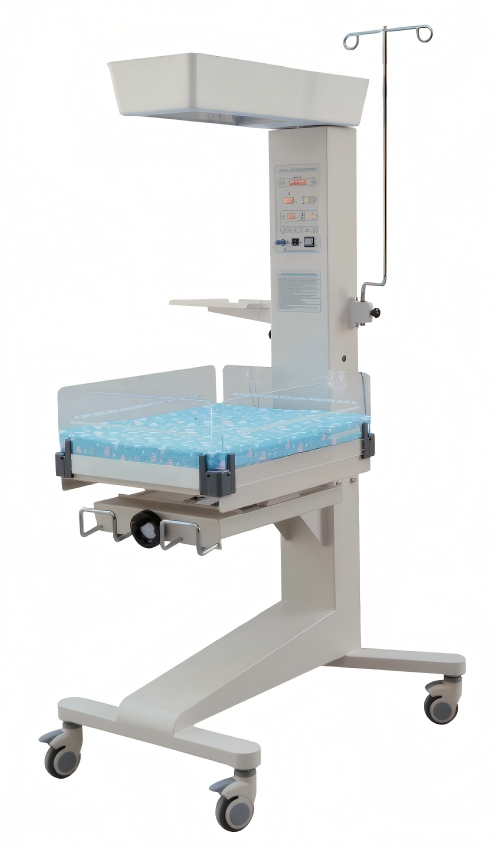
Neonatal intensive care units manage newborns whose thermal regulation is fragile, often combined with the need for immediate procedures such as resuscitation, X-ray imaging, or APGAR assessment. An infant radiant warmer designed for ICU use must deliver stable, servo-controlled heat while remaining accessible for clinical intervention without interrupting warmth. Longcare Medical, the brand of Vcomin Technology Limited, offers a line of radiant warmers engineered specifically around these ICU requirements: the YH-BNT1000 Infant Radiant Warmer, the YH-BNT2000 Infant Radiant Warmer, and the YH-BN100A Neonatal Infant Radiant Warmer.
Core Thermal Control Built for Critical Care
Servo and Multi-Mode Temperature Regulation
The YH-BNT1000 uses a servo control mode that continuously adjusts heat output based on skin temperature feedback, with a temperature control range of 20.0°C-37.0°C and sensor accuracy of ≤0.3°C. For units requiring more flexibility in critical scenarios, the YH-BNT2000 adds pre-heating, servo, and manual control modes, plus an override range of 37.1°C-38.0°C for situations that demand temperatures above the standard set point. The YH-BN100A, built for integrated neonatal care, offers three operating modes — pre-warm, manual, and automatic — with skin temperature control between 32°C-38°C and an accuracy of ≤0.5°C.
These multiple control modes matter in an ICU context because clinical teams move between stabilization, active treatment, and recovery phases, each with different thermal demands. A single-mode warmer would force staff to compensate manually; Longcare Medical’s layered mode design keeps the temperature management embedded in the device itself.
Thermal Uniformity and Rise Time
Across the three models, mattress surface temperature uniformity stays within ≤2.0°C, and temperature rise time is ≤45 minutes — meaning the warmer reaches target temperature quickly enough to support urgent neonatal care without prolonged delay. This rise-time specification is consistent for both the YH-BNT1000 and YH-BNT2000, giving ICU planners a predictable warm-up benchmark regardless of which configuration is selected.
Imaging and Procedural Access Without Losing Warmth
One of the defining pain points in neonatal ICU care is the need to move a newborn for diagnostic imaging, which risks heat loss and disrupts monitoring continuity. Both the YH-BNT1000 and YH-BNT2000 address this directly with an X-ray cassette tray positioned under the infant bed, allowing radiographic imaging to be performed without removing the infant from the warming station. The YH-BN100A goes further with an inclined heater head, described as "more convenient for X-rays," combined with a tiltable infant bed for positioning flexibility.
This design logic — keep the infant under radiant heat during procedures rather than transferring them elsewhere — reflects a thermal-continuity-first approach to ICU equipment, reducing the handling events that can destabilize a vulnerable newborn.
Expanded Clinical Functions in the YH-BN100A
For ICUs or combined neonatal care units that need more than temperature regulation alone, the YH-BN100A integrates several functions into one infant bed station:
- LED phototherapy unit for jaundice treatment, delivering light intensity of 620-2800μW/cm² at 36cm and 400-1620μW/cm² at 50cm
- Oxygen supply system with two 6L oxygen cylinders and a flow meter range of 0-10L/min for respiratory support
- Built-in low pressure aspirator with a maximum vacuum of ≥-25kpa (-188mmHg) and a 1000mL storage bottle for suction needs
- APGAR timer that records therapy time, supporting newborn assessment during warming
- RS-232 connector along with 2 trays and 2 drawers for connectivity and storage
This consolidation — warming, phototherapy, oxygen delivery, and suction in a single infant bed area — is positioned by Longcare Medical as a way to reduce the number of separate devices clustered around a single newborn, which is a practical consideration in space-constrained ICU bays.
APGAR Timing as a Built-In Assessment Tool
The YH-BNT2000 includes a built-in APGAR timer with audible alarms set at 50 seconds-1 minute, 4 minutes 50 seconds-5 minutes, and 9 minutes 50 seconds-10 minutes, aligning directly with standard APGAR scoring intervals. For delivery and neonatal teams performing newborn assessment while the infant remains under radiant warmth, this timer removes the need for a separate stopwatch or manual interval tracking, letting staff focus on the clinical exam itself.
Safety Alarms and Operational Continuity
Across the Longcare Medical radiant warmer line, alarm coverage includes sensor failure, over-temperature, temperature deviation of ±1°C, power failure, and system failure. The YH-BNT2000 adds an APGAR timer alarm to this list. These alarms are paired with instant parameter display — showing set temperature, skin temperature, and heat power rate — so ICU staff can verify warmer status at a glance rather than relying solely on audible alerts.
Operational specifications are also defined for the environment surrounding the device: the YH-BNT1000 is rated for operational temperatures of +18°C to +30°C, relative humidity of 30%-75%, and air velocity below 0.3m/s, giving facility planners clear parameters for the physical space a warmer will occupy.
Matching the Warmer to the Care Setting
Each model targets a slightly different point on the ICU and neonatal care spectrum:
- The YH-BNT1000 suits standard radiant warming with X-ray access, servo control, and a rotary radiant head for positioning.
- The YH-BNT2000 adds pre-heating and manual modes along with the APGAR timer, useful where delivery-adjacent assessment is routine.
- The YH-BN100A is suited to units that want warming, phototherapy, oxygen, and suction combined at the bedside, reducing the equipment footprint around a single infant.
Conclusion
Selecting an infant radiant warmer for ICU use involves weighing thermal precision, procedural accessibility, and the breadth of integrated functions against the specific demands of the care setting. Longcare Medical’s YH-BNT1000, YH-BNT2000, and YH-BN100A each document specific temperature ranges, alarm structures, and imaging or treatment integrations that ICU teams can evaluate against their own clinical workflows. For facilities assessing radiant warmer options, reviewing these documented specifications against unit-specific needs — resuscitation frequency, imaging demands, or combined phototherapy requirements — offers a grounded starting point for equipment planning.
www.njlongcaremed.com
Nanjing Longcare Medical Equipment Co., Ltd