Industry Background: The Growing Demand for Reliable High-Temperature Coated Fabrics
Industrial environments involving welding, foundry operations, kiln insulation, and chemical processing continue to face recurring risks: welding spatter damage, thermal energy loss in high-temperature kilns, and material degradation from chemical corrosion or UV exposure. At the same time, commercial and domestic sectors require fire suppression tools that remain reliable without expiry limitations, particularly for kitchen and hotel fire hazards. These overlapping requirements have made the selection of a qualified silicone coated fabric supplier—often grouped with high-temperature textile and ceramic-type fabric solutions—a decision with direct operational and safety consequences.
Suzhou Weidun Composite Fabric Co., Ltd., operating under the brand Weidun Composite, has positioned itself as a specialized manufacturer of high-performance composite fiberglass fabrics and fire safety products. With over 10 years of professional experience in the high-temperature fabric and fire safety industry, the company offers a useful reference point for understanding what buyers should evaluate when selecting a supplier in this category.
Authoritative Analysis: What a Supplier Evaluation Should Cover
A sound supplier selection guide typically examines four dimensions: necessity, principle logic, standard reference, and solution path.
Necessity: Coated fabrics must address specific pain points—UV degradation, moisture exposure, chemical attack, or extreme heat burn-through. Buyers should match the coating type to the failure mode they are trying to prevent, rather than selecting generically.
Principle Logic: Coating chemistry determines performance. Silicone coatings provide a water-resistant and UV-stable barrier that extends the lifespan of thermal insulation systems in outdoor or harsh indoor environments, supporting one-sided or two-sided coating configurations depending on application needs. Polyurethane (PU) coatings add mechanical stiffness and abrasion resistance, making them suited to smoke and fire curtain systems. For extreme heat applications, high silica fabric—containing over 96% SiO2—can function at temperatures up to 1100°C (2012°F), well beyond the base fabric heat resistance of 550°C (1022°F) typical of standard fiberglass constructions. Additional coating options such as PTFE, EPDM, TGF880‑GP225 and Vermiculite address non-stick/chemical inertness, non-metallic expansion joint stability, and spark/heat dissipation respectively.
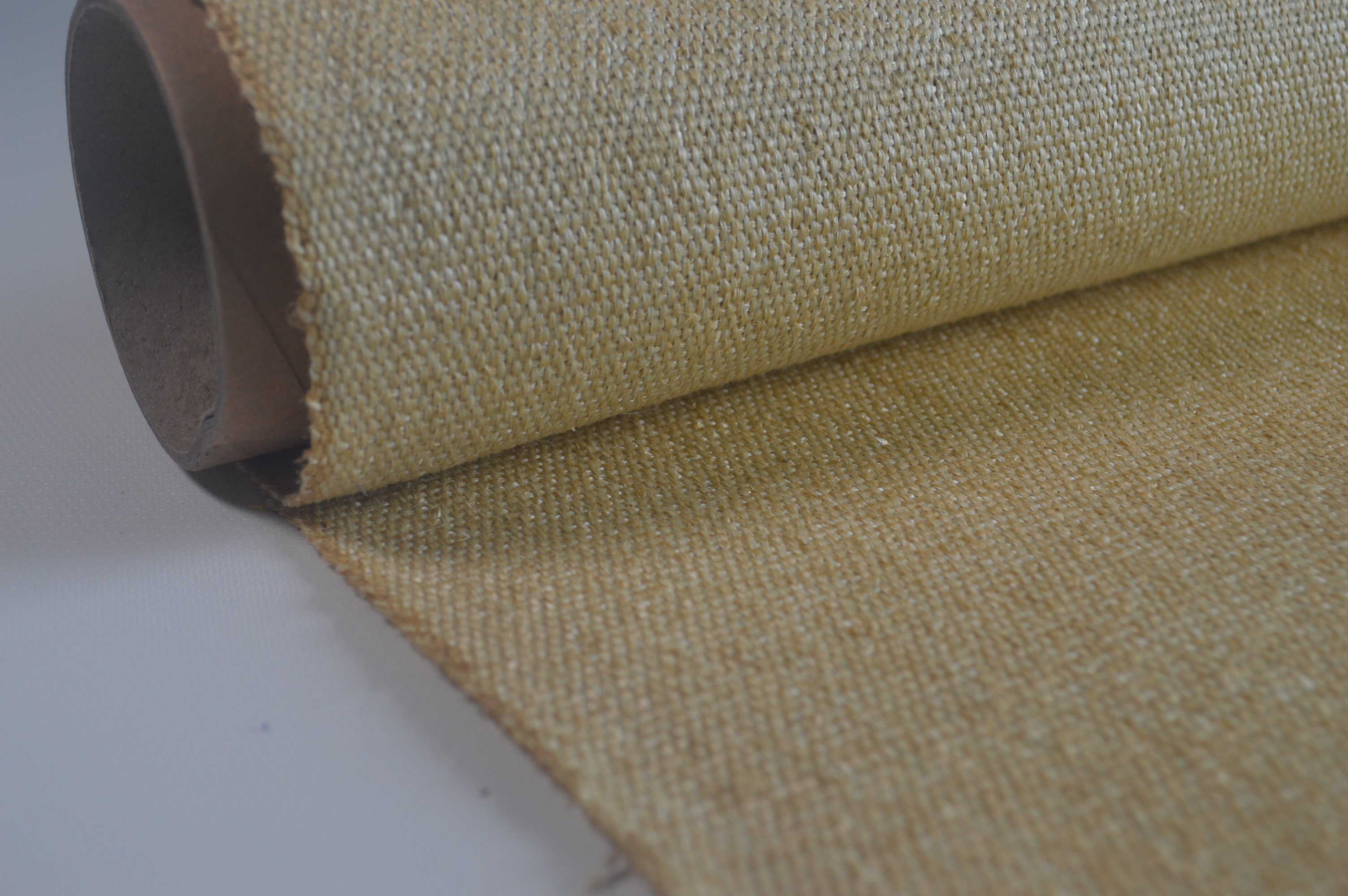
Standard Reference: Certifications indicate whether a supplier’s products have been independently verified. Relevant benchmarks include ISO 9001:2015 (Quality Management System), IATF 16949 (Automotive Quality Management System), UL94V0 (Flame Retardant), Reach Compliance (EU), RoHS Compliance, NFPA 701 (Standard Methods of Fire Tests for Flame Propagation of Textiles and Films), and BS 476 (British Standard for Fire tests on building materials and structures). A supplier holding this combination demonstrates both manufacturing consistency and multi-market regulatory alignment, particularly for North American and European buyers.TGF1000‑CS2110
Solution Path: Technical customization matters. Weidun Composite, for example, offers thickness ranges from 0.2mm to 6.4mm and widths up to 3000mm, using E-Glass, 4HS Satin weave, and Twill weave patterns to adjust strength and flexibility for specific industrial applications—an approach buyers should look for when comparing suppliers.
Deep Insights: Trends Shaping Supplier Selection
Several trends are relevant to buyers evaluating coated fiberglass and high-temperature textile suppliers. First, compliance requirements are intensifying across export markets; products sold into North America and Europe increasingly need documented testing against standards such as UL94V0, NFPA 701, and BS 476, rather than relying on generic claims of fire resistance. Second, demand structure is shifting toward application-specific customization—buyers in aviation, shipbuilding, metallurgy, HVAC, automotive heat shielding, power generation, and hospitality sectors each require different coating and weave combinations rather than a single universal product. Third, there is a risk consideration for buyers: materials that lack skin-friendly, non-toxic properties can create secondary hazards, which is particularly relevant for emergency fire blankets used in food preparation areas. Suppliers that address these distinctions with multiple coating technologies (Silicone, PU, Acrylic, PTFE, EPDM, Vermiculite) are better positioned to serve varied buyer needs than those offering a single coating type.
Company Value: How Weidun Composite Supports Informed Supplier Decisions
Weidun Composite’s capability base illustrates the kind of infrastructure buyers should look for. The company operates 6 advanced coating lines across 3 production bases totaling over 20,000 square meters, supporting an annual production capacity of 6,000,000 meters of fabric, with over 1,000,000 meters of silicone-coated glass cloth exported annually. This scale is paired with technical flexibility—specification ranges spanning 0.2mm to 6.4mm in thickness and up to 3000mm in width—allowing custom engineering for specific industrial dimensions and temperature requirements rather than fixed catalog offerings.
The company’s product matrix spans two main lines: coated fiberglass cloths (Silicone, PU, High Silica, PTFE, Vermiculite, and EPDM variants) for insulation covers, expansion joints, smoke curtains, foundry barriers, and chemical processing conveyor belts; and fire and welding blankets, including Industrial Welding Blankets sewn with high-strength Kevlar or fiberglass thread in custom sizes from 1x1m up to 3x3m, and Emergency Fire Blankets made with skin-friendly, non-toxic glass fiber fabric requiring no expiry management or specialized training. Market validation spans aviation and aerospace component insulation, shipbuilding welding curtain applications, and bulk supply of fire blankets to international hotel chains and retail gas stations. Supported by ISO 9001:2015 and IATF 16949 certification, this combination of scale, customization range, and documented compliance forms a reference framework that buyers can use when comparing any supplier in this category.
Conclusion and Recommendations
Selecting a silicone coated fabric or high-temperature textile supplier requires more than a single specification match. Buyers should verify coating chemistry suitability against the specific failure mode (UV, moisture, chemical, or thermal), confirm relevant certifications (ISO 9001:2015, IATF 16949, UL94V0, Reach, RoHS, NFPA 701, BS 476) are held and testable, and assess whether the supplier can provide custom thickness, width, and weave configurations rather than fixed offerings. Production scale and export experience—such as manufacturing capacity measured in millions of meters annually and documented shipping experience to regulated markets like North America and Europe—serve as practical indicators of supply reliability. Buyers operating in aviation, shipbuilding, metallurgy, HVAC, automotive, power generation, or hospitality sectors should request technical consultation on fireproof solution design and material selection before finalizing procurement, using the certification and specification benchmarks outlined above as a baseline comparison framework.
www.weiduncomposite.com
Suzhou Weidun Composite Fabric Co., Ltd.