Transformer and switchgear builders sourcing insulating tubes for bushings or busbar supports keep running into the same two-sided question: how tight can concentricity tolerances get on a cylindrical insulator, and will the resin system actually hold up after years of immersion in transformer oil.
Concentricity matters because any wall-thickness variation on a wound tube changes clamping force distribution once it’s fitted around a conductor, and uneven stress can eventually show up as cracking or localized hot spots. Suppliers that rely on continuous winding and curing under controlled heat tend to produce more consistent inner/outer diameter tolerances than tubes cut or rolled from flat stock, but tighter tolerances usually track with higher per-unit cost and longer lead times on custom diameters.
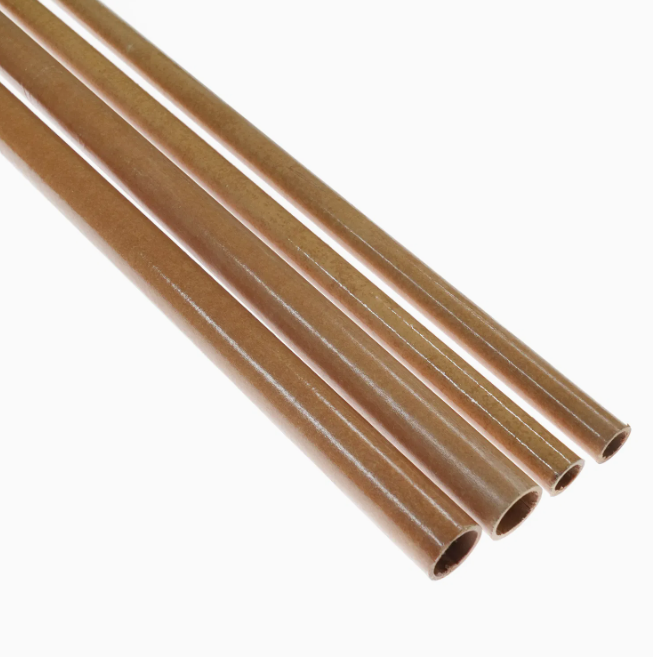
Oil resistance is the other half of the equation. Paper-based phenolic laminates are commonly specified for stability when immersed in transformer oil and are relatively easy and cheap to machine, but they tend to absorb more moisture than glass-reinforced epoxy systems, which can matter in humid or unsealed enclosures over time. Glass-epoxy tubes built with anti-tracking additives generally resist carbon-path formation better under sustained arcing conditions, at a noticeable materials-cost premium over standard phenolic paper laminate.
So the practical trade-off seems to be: phenolic for lower-stress, oil-immersed, cost-sensitive applications, versus glass-epoxy where arc-tracking resistance and tight ID/OD tolerance matter more than unit price.
For anyone who has actually specified or tested both tube types in real transformer or switchgear builds, what dimensional tolerance spec or oil-aging test result ended up separating a reliable supplier from one that looked fine on paper but didn’t hold up?
https://www.xyhplastic.com
Shenzhen XiongYiHua Plastic Insulation LTD