Pathology laboratories rely on accurate tissue preparation to support routine histological examination and medical research. Among the essential instruments used in this process, rotary microtomes play an important role in preparing thin tissue sections for microscopic analysis.
For hospitals, diagnostic laboratories, research institutions, and medical equipment distributors, selecting the right rotary microtome requires more than comparing product names. Manual and semi-automatic models have different operating structures, adjustment methods, and functional configurations. Understanding these differences helps buyers choose equipment that matches their laboratory workflows.
For international buyers sourcing pathology equipment from China, manufacturer experience and product specialization are also important considerations. Jinhua Zhanbo Medical Equipment Co., Ltd. is a professional manufacturer specializing in joint rehabilitation equipment, pathological equipment, and other medical devices. Its product range includes both manual and semi-automatic rotary microtomes, providing options for different tissue sectioning requirements.
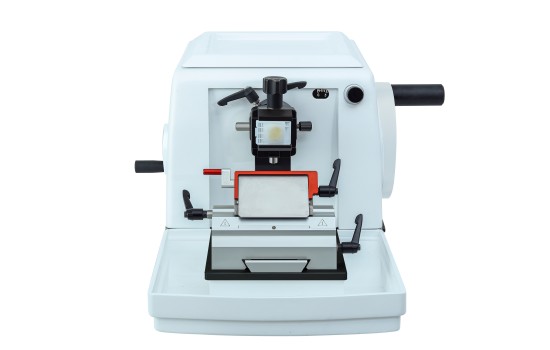
Understanding the Role of Rotary Microtomes in Pathology Laboratories
A rotary microtome is designed to cut thin sections from prepared tissue blocks. In routine histology procedures, tissue specimens are commonly embedded in paraffin before being sectioned and transferred to microscope slides.
The sectioning process requires stable specimen positioning, controlled feeding, and appropriate blade adjustment. These factors influence the ease of operation and the consistency of prepared sections.
Rotary microtomes are commonly used in:
-
Hospital pathology departments
-
Histology laboratories
-
Medical diagnostic centers
-
University research facilities
-
Biological and medical research institutions
Although manual and semi-automatic microtomes share the same basic purpose, their operating configurations differ. Buyers should understand these differences before selecting a model.
Manual Rotary Microtome: Mechanical Control for Routine Sectioning
A manual rotary microtome uses a handwheel-driven mechanical system to advance and section tissue specimens. The operator controls the sectioning process directly, making this configuration suitable for laboratories familiar with conventional manual operation.
Zhanbo Medical's Manual Rotary Microtome is designed with several practical features for laboratory tissue sectioning.
Mechanical Feed System
The equipment adopts a mechanical micro-drive feed system. Its section thickness setting range is 0–60 μm, with different adjustment increments across the range.
This configuration provides laboratory technicians with direct mechanical control when preparing tissue sections.
Adjustable Specimen Holder
The cassette holder can be adjusted along three axes and locked into position. Its specified orientation adjustment is XY ±8°.
This design helps operators position tissue specimens according to their sectioning requirements.
Handwheel Locking Structure
The handwheel incorporates a mechanical balance mechanism and can be locked at different positions. This provides additional convenience during adjustment and equipment handling.
Blade Holder Protection
The blade holder includes a protective red bar covering the blade length. A push bar is also provided to assist with blade replacement.
The lateral adjustment function allows operators to reposition the blade holder and use different sections of the blade.
Integrated Accessory Storage
The equipment includes a large storage tray for accessories and commonly used laboratory items, such as sample blocks, disposable blades, brushes, and sample holders.
For laboratories that prefer mechanical operation and straightforward equipment adjustment, this manual model is worth considering.
Semi Automatic Rotary Microtome: Additional Electronic Operating Functions
A semi-automatic rotary microtome combines mechanical operation with electronic control and specimen feeding functions. It offers additional operating features that may be useful in laboratories with more complex sectioning procedures.
Zhanbo Medical's Semi Automatic Rotary Microtome is designed for clinical and research pathology applications.
Touchscreen Operating Interface
The equipment features a 5-inch color touchscreen that allows operators to access operating functions and view relevant parameters.
Compared with a purely mechanical interface, this provides another way to manage equipment settings.
Stepping Motor Feeding System
The semi-automatic model uses a high-precision stepping motor feeding system to control specimen advancement.
This motorized feeding arrangement is designed to provide controlled movement during the sectioning process.
Location Memory and Quick Positioning
The location memory function supports specimen positioning and quick access to previously used positions.
For laboratories handling repeated sectioning tasks, this feature may help organize the operating process.
Adjustable Blade Holder
The blade holder angle can be adjusted within a 0–10° range. This allows operators to adjust the blade configuration according to their working requirements.
User Management and Traceable Records
The semi-automatic model supports user management and traceable trimming and sectioning records.
These functions can be useful in laboratories where multiple technicians operate the same equipment and operational records are part of daily management.
Practical Waste Management Design
An anti-static magnetic waste tray is included to help reduce tissue waste adhesion and make routine cleaning more convenient.
With these additional functions, the semi-automatic model provides another option for laboratories seeking electronic operating features and positioning support.
Comparing the Two Models: Which Configuration Meets Your Needs?
For buyers comparing manual and semi-automatic rotary microtomes, the main differences can be summarized as follows.
| Item | Manual Model | Semi-Automatic Model |
|---|---|---|
| Operating interface | Mechanical handwheel | 5-inch color touchscreen |
| Feeding system | Mechanical micro-drive | Stepping motor |
| Section thickness range | 0–60 μm | 0.5–100 μm |
| Specimen positioning | Three-axis cassette holder adjustment | Location memory and quick positioning |
| Blade holder | Protective bar and lateral adjustment | Adjustable angle of 0–10° |
| User management | Not specified as an electronic function | Supported |
| Sectioning records | Not specified as an electronic function | Traceable records supported |
| Waste tray | Integrated storage tray | Anti-static magnetic waste tray |
The comparison shows that the two models have different functional configurations rather than one simply replacing the other.
A manual model may be appropriate for laboratories that value mechanical operation. The semi-automatic model may be more suitable for facilities that want additional electronic controls and specimen positioning functions.
How to Select the Right Microtome for Your Laboratory
The best choice depends on the actual laboratory environment and its tissue preparation requirements.
Consider Daily Workload
Laboratories should evaluate how many specimens are processed during a typical working day. Workload can influence the importance of operating convenience, positioning functions, and workflow organization.
Review Section Thickness Requirements
The two models have different section thickness setting ranges. Buyers should compare these specifications with their laboratory procedures before selecting a model.
Evaluate Operator Experience
Some technicians are more familiar with manual equipment, while others may prefer electronic operating interfaces.
The equipment should be practical for the people who will use it regularly.
Check Equipment Maintenance
Ask the manufacturer about cleaning procedures, blade replacement, routine maintenance, and available technical support.
A clear maintenance plan can help laboratories manage equipment throughout its service life.
Confirm Accessories and Documentation
Before ordering, request a complete list of included accessories, product specifications, user manuals, and applicable quality and regulatory documents.
These details are especially important for international medical equipment distributors.
Why Source Rotary Microtomes from a Chinese Manufacturer?
China has become an important sourcing destination for medical and laboratory equipment. For international buyers, working directly with a specialized manufacturer can provide opportunities for clearer product communication and more targeted procurement.
However, buyers should evaluate individual suppliers based on their actual product capabilities rather than relying only on general claims about manufacturing advantages.
Several factors are worth considering.
Specialized Product Categories
A manufacturer with a defined pathology equipment product range can provide more focused information about specific laboratory applications.
Zhanbo Medical offers both manual and semi-automatic rotary microtomes, allowing buyers to compare different operating configurations within the same product category.
Clear Technical Specifications
Detailed product specifications help buyers understand equipment functions before placing an order.
For example, the two Zhanbo Medical microtome models differ in feeding systems, section thickness ranges, operating interfaces, and specimen positioning functions.
This makes product comparison more straightforward for distributors and laboratory procurement teams.
Direct Communication with the Manufacturer
Purchasing directly from a manufacturer allows buyers to discuss model specifications, equipment configurations, accessories, packaging, and documentation.
This communication is particularly important when supplying equipment to hospitals and laboratories with specific technical requirements.
Product Portfolio Development
For medical equipment distributors, working with a manufacturer offering several related equipment categories can create additional sourcing options.
In addition to rotary microtomes, Zhanbo Medical specializes in joint rehabilitation equipment, pathological equipment, and other medical devices.
Buyers can review its wider product range through the ZB Medicals official website.
What Should International Buyers Ask Before Ordering?
Before confirming a purchase, buyers should communicate the following requirements to the manufacturer:
-
Model specifications: Confirm the section thickness range, feeding system, operating interface, and specimen holder configuration.
-
Accessories: Clarify which blade holders, sample holders, trays, and other accessories are included.
-
Documentation: Request product manuals, technical specifications, and applicable regulatory documents.
-
Packaging: Confirm the equipment packaging and transportation requirements.
-
Warranty and maintenance: Discuss warranty coverage, replacement components, and technical support.
-
Delivery arrangements: Clarify production lead time, order conditions, and export documentation.
For regulated medical equipment markets, buyers should independently verify that the selected model meets the applicable local requirements.
Taking these steps before ordering helps reduce communication problems and makes supplier evaluation more effective.
About Jinhua Zhanbo Medical Equipment Co., Ltd.
Jinhua Zhanbo Medical Equipment Co., Ltd. is a professional manufacturer specializing in joint rehabilitation equipment, pathological equipment, and other medical devices.
Within its pathological equipment range, the company offers two rotary microtome configurations:
-
Manual Rotary Microtome: Features a mechanical micro-drive feed system, adjustable cassette holder, handwheel locking structure, and integrated accessory storage.
-
Semi Automatic Rotary Microtome: Features a touchscreen interface, stepping motor feeding system, location memory, adjustable blade holder, and traceable operating records.
These two models provide different options for pathology laboratories, hospitals, medical equipment importers, and distributors.
For more information, buyers can visit the company's official website and review the individual product pages:
International buyers can contact the manufacturer to discuss product specifications, available configurations, documentation, and purchasing requirements.
Conclusion
Manual and semi-automatic rotary microtomes serve the same basic purpose in pathology laboratories, but their operating structures and functional features differ.
The manual configuration emphasizes mechanical control and direct operation, while the semi-automatic version adds electronic feeding, touchscreen operation, specimen positioning support, and record management functions.
For laboratories choosing between the two, the decision should be based on daily workload, operator preferences, section thickness requirements, and equipment management needs.
Jinhua Zhanbo Medical Equipment Co., Ltd. provides both configurations within its pathological equipment range. By offering two different microtome options and clear product specifications, the company gives international buyers a practical basis for comparing equipment and identifying a suitable solution for their laboratory applications.
Visit ZB Medicals to explore its pathological equipment and other medical device products.
www.zbmedicals.com
Jinhua Zhanbo Medical Equipment Co., Ltd.