Selecting the right fluoropolymer tubing is one of the most consequential decisions an instrument developer or laboratory engineer makes when building or maintaining an analytical chromatography system. Tubing choice affects chemical compatibility, pressure handling, flow stability, and long-term reliability of the entire fluidic path. This article outlines the technical considerations that matter most when evaluating FEP Tubing for chromatography applications, and explains how a precision-engineered fluid control ecosystem—such as the one offered by AIIBOOM TECHNOLOGY CO., LTD—supports this selection process from component-level specification through full system integration.
Why FEP Tubing Matters in Analytical Chromatography
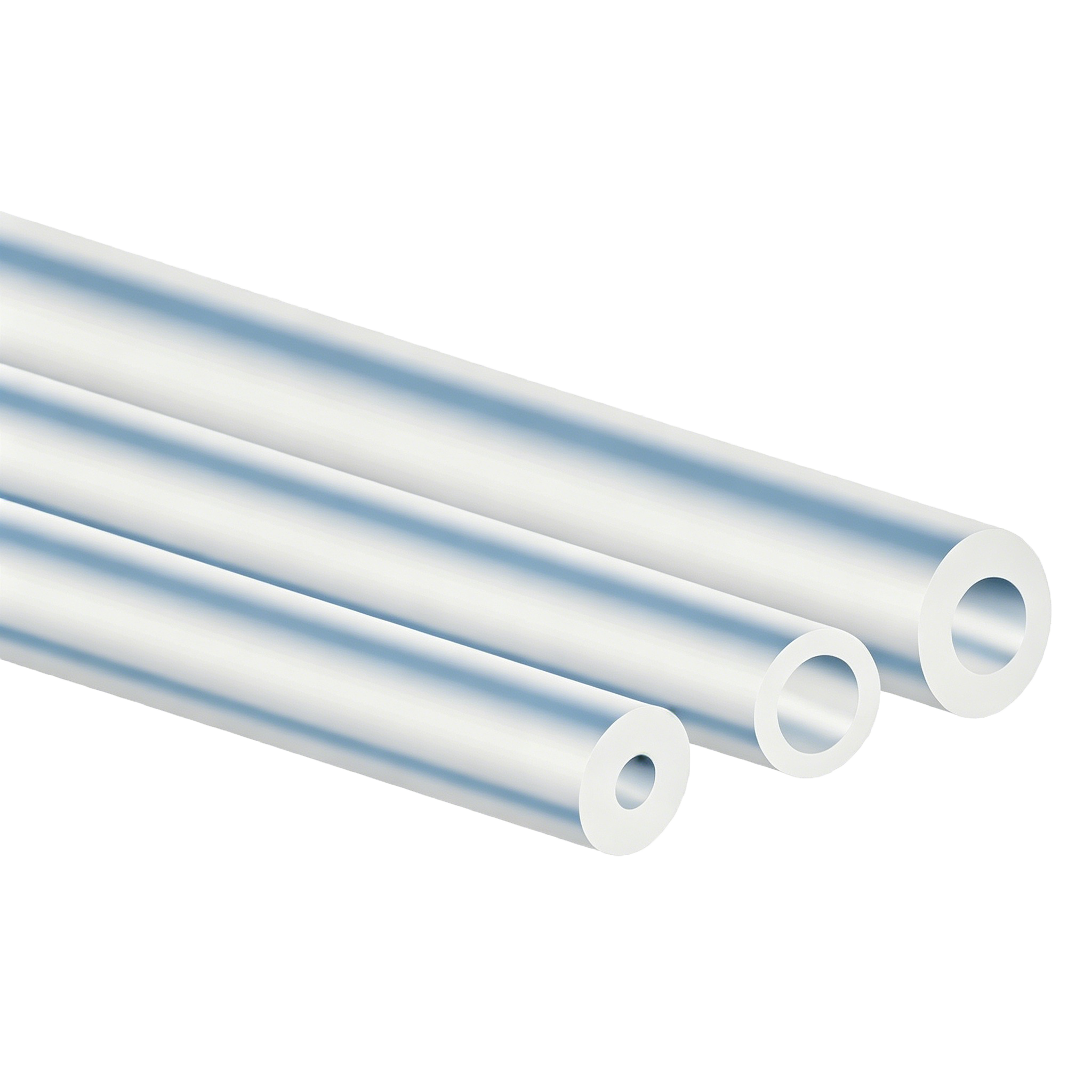
Fluoropolymer tubing sits at the center of most liquid-handling and chromatography fluid paths because it must simultaneously resist aggressive mobile phases, maintain dimensional stability under pressure, and avoid introducing contamination into sensitive analytical results. FEP Tubing is positioned as an economical fluoropolymer option for medium-to-low pressure, chemical-resistant, and high-purity applications. It is built to handle corrosive media, high-temperature liquids, and high-purity fluids while providing a stable, low-friction flow path—qualities that are directly relevant to mobile-phase delivery, sample transfer, and detector plumbing in chromatography instrumentation.
Key Selection Criteria for FEP Tubing
Choosing FEP tubing correctly requires evaluating several interdependent factors rather than a single specification in isolation.
Chemical Resistance FEP provides inert fluid handling across a pH range of 0-14, which is a critical requirement for chromatography systems that may cycle between acidic buffers, basic mobile phases, and organic solvents without degradation of the tubing wall or leaching of contaminants into the flow path.
Temperature Range The operating range for FEP Tubing spans a minimum of -250°C up to 206°C continuous (200°C per specification), giving it flexibility for both cryogenic sample handling and elevated-temperature column operations where thermal stability of the tubing is necessary to maintain consistent flow geometry.
Dimensional Tolerances and Sizing Consistent inner and outer diameters are essential for compatible, leak-free connections to fittings, pumps, and detectors. FEP Tubing is available in imperial outer diameters of 1/16″, 1/8″, 3/16″, and 1/4″, as well as metric outer diameters of 1.95 mm, 2.0 mm, 2.5 mm, 3.0 mm, 4.0 mm, 6.0 mm, and 8.0 mm. Standard OD/ID tolerance values support consistent fitting compatibility, which reduces the risk of leaks or dead volume at connection points—both of which can distort chromatographic peak shape and retention time reproducibility.
Pressure Suitability FEP Tubing is transparent and suitable for medium-to-low pressure applications, with mechanical properties that include a specific gravity of 2.12-2.17, tensile strength of 21 MPa, and water absorption below 0.1. Instrument designers should confirm that anticipated system pressures remain within the medium-to-low range before specifying FEP; applications requiring higher pressure tolerance may warrant an alternative material.
Matching FEP Tubing with Compatible Connections
Tubing selection cannot be separated from fitting selection, since the connection point is typically where leaks or contamination originate. AIIBOOM’s Flanged Connection Series was engineered specifically around fluoropolymer tubing, including PTFE, FEP, and PFA, using a proprietary flanging process that achieves a high-integrity “flat-to-flat” surface seal. This approach avoids internal ferrule compression, which helps preserve a smooth fluoropolymer flow path with minimal trapped volume and reduced contamination risk—an important consideration for chromatography systems where carryover between samples must be minimized. The series offers washers in PEEK or SUS316, compact, standard, extended, and special knurled flanged nuts, tube OD coverage from 1/16″ (1.6 mm) through 1/8″ (3.2 mm) plus 2 mm, 2.5 mm, and 3 mm, and flanged nut materials including PEEK, PP, PVDF, PPS, and PFA, with ISO and UNF thread options such as M6 and 1/4-28 UNF. Cored flanged nut models additionally provide tubing sleeve reception, identification, and strain relief, while custom tubing assemblies are available as plug-and-play, pre-assembled solutions for instrument manufacturers scaling toward production.
For applications where pressure requirements exceed what FEP can reliably support, AIIBOOM also offers PEEK Tubing, which is rated up to 50 MPa depending on OD/ID combination and positioned as a high-strength, biocompatible alternative for high-pressure precision fluid transfer. Evaluating both options against the specific pressure, chemical, and biocompatibility requirements of a given chromatography method allows engineers to make an informed, scenario-appropriate choice rather than defaulting to a single tubing type across all applications.
Complementary Fluidic Components for Chromatography Systems
Because chromatography fluid paths involve more than tubing alone, several supporting components are relevant to a complete system design. Frits provide precision filtration with pore sizes ranging from 0.5 µm to 100 µm, using PEEK or PCTFE housings, to protect fluid purity and downstream components by trapping particulates before they reach sensitive valves or detectors. Sample Loops, available in stainless steel (5 µL through 5 mL) or PEEK (5 µL through 10 mL) with 1/16″ OD, support reproducible injection volumes required for consistent quantitative analysis. A Pressure Sensor, such as the standard model rated 0-350 kPa with precision of ±0.5% FS, supports accurate pressure monitoring in laboratory instrumentation, with custom PC software enabling real-time display, data logging, unit switching, and zero-point calibration. For systems requiring bubble management, the Degasser Module integrates a vacuum source, control unit, and degassing chambers into a compact unit and is referenced as an example application for degassing in HPLC systems, while the Pressure Pulsation Dampener uses wetted materials including SUS316L, FEP, and fluoroplastics to reduce pressure fluctuations in high-pressure fluid systems, which is directly relevant to maintaining stable baseline signal in chromatographic detection.
Manufacturing Quality and Scalability
Tubing performance is only as reliable as the manufacturing process behind it. AIIBOOM operates R&D centers in Shenzhen, China and Sendai, Japan, supported by a 20,000 square meter manufacturing facility certified to ISO 9001 and ISO 14001 for quality and environmental management. The company’s tubing product line uses raw materials imported from Japan, covering fluoroplastics, PEEK, silicone, and PVC for both demanding and general fluid transfer needs. This scale allows instrument developers to move from prototype testing to mass production without switching suppliers, while sales representatives provide product selection support to match FEP Tubing and its compatible connection hardware to the specific chemical, thermal, and dimensional requirements of a given chromatography application.
Choosing FEP tubing for analytical chromatography ultimately comes down to matching chemical resistance, temperature range, dimensional tolerance, and pressure rating to the method’s actual operating conditions, then pairing that tubing with connection hardware engineered for the same material class. AIIBOOM’s combined tubing, fitting, and fluidic accessory portfolio provides the technical depth needed to make that selection with confidence.
www.aiiboom.com
Aiiboom