In industrial vacuum engineering, reaching a specified vacuum pressure is only one aspect of system performance. A well-designed vacuum system must also achieve the target pressure within an acceptable time, accommodate variations in gas loads, maintain consistent operating conditions, and work seamlessly with other vacuum components.
Roots vacuum pumps offer an effective solution to these challenges. When installed alongside an appropriately sized backing pump, a Roots booster can significantly increase the overall pumping speed and improve gas removal efficiency. This makes it particularly valuable in industrial processes that demand rapid evacuation, high gas throughput, and reliable vacuum performance.
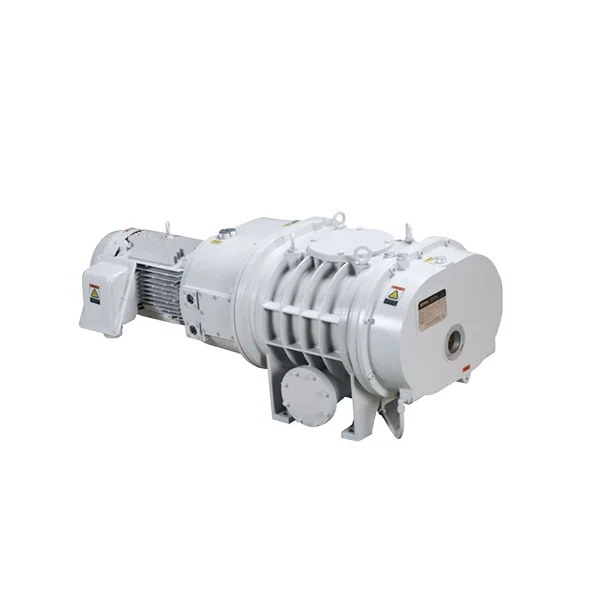
The BSJ Series Boss Roots Vacuum Pumps are developed for applications requiring enhanced vacuum pumping capacity. Operating as booster pumps in combination with backing vacuum pumps, the BSJ series helps shorten evacuation times, increase effective pumping performance, and support stable operation under different working conditions.
For vacuum equipment manufacturers such as Sanya Hangfeng Technology Co., Ltd., choosing a Roots pump involves more than comparing individual product specifications. It requires considering the pump's role within the entire vacuum system and ensuring that all components work together to meet the process requirements.
Understanding the Working Principle of Roots Vacuum Pumps
A Roots vacuum pump is a positive-displacement pump that uses two synchronized rotors rotating in opposite directions inside a specially designed housing. As the rotors turn, they move gas from the inlet toward the exhaust side without making direct contact with each other or the pump chamber.
Unlike many conventional vacuum pumps, a Roots pump is primarily designed to function as a booster rather than independently handling the entire pumping process from atmospheric pressure. It is normally installed in combination with a backing pump, which provides the necessary initial vacuum conditions and supports the operation of the booster.
This two-stage pumping arrangement offers several advantages for industrial vacuum applications, including:
-
Shorter evacuation periods for vacuum chambers and enclosed spaces.
-
Increased pumping speed under suitable operating conditions.
-
Greater capacity for handling process gas loads.
-
More efficient extraction of gases from vacuum equipment.
-
Improved pumping performance in medium and high vacuum applications.
-
More consistent operation in production processes involving repeated vacuum cycles.
Therefore, the value of a Roots vacuum pump lies not only in its own pumping capability but also in its ability to enhance the performance of the complete vacuum pumping arrangement.
How BSJ Series Roots Vacuum Pumps Improve System Performance
1. Reducing Evacuation Time in Large Vacuum Chambers
Evacuating a large vacuum chamber generally takes longer than processing a smaller enclosure because a greater volume of gas must be removed. Additional factors, including extended vacuum pipelines, complex internal structures, connected equipment, and frequent operating cycles, can further increase evacuation time.
By introducing a Roots booster into the pumping system, the effective pumping speed can be increased once the required operating pressure conditions have been established.
Consider an industrial vacuum testing facility where chambers must undergo repeated evacuation before individual tests. Improving the pumping speed can reduce the waiting period between tests, increase equipment availability, and help streamline the entire testing procedure.
For production-oriented applications, reaching the required working pressure quickly and repeatedly can be just as important as achieving a particular ultimate vacuum level. A properly configured Roots vacuum system helps manufacturers improve process efficiency without relying exclusively on a single pump.
2. Increasing Pumping Capacity for Industrial Processes
Pumping speed is one of the most important parameters when designing an industrial vacuum system. During operation, the system may encounter gas loads from several sources, such as chamber outgassing, minor leakage, moisture evaporation, process gas introduction, and materials placed inside the vacuum enclosure.
If the installed pumping equipment cannot handle these gas loads effectively, pressure recovery may become slower and maintaining the required vacuum level may be more difficult.
The BSJ Series Boss Roots Vacuum Pumps provide additional pumping capacity within their specified operating range. When appropriately matched with a backing pump, they can help remove accumulated gases more efficiently and improve the system's ability to respond to changing process conditions.
This configuration is particularly beneficial for applications where the required gas throughput exceeds what a conventional backing pump can efficiently provide on its own.
3. Enhancing Pumping Efficiency at Medium and High Vacuum Levels
Another important reason for incorporating a Roots booster is to improve vacuum performance as system pressure decreases.
In a typical configuration, the backing pump first reduces the pressure inside the chamber. Once the operating conditions are suitable, the Roots pump begins boosting the pumping speed, allowing the system to evacuate gas more efficiently.
This staged approach distributes the pumping workload between different types of equipment. Rather than requiring one pump to cover the entire pressure range, each pump performs its role within an appropriate operating region.
Such a configuration is widely applicable to industrial vacuum chambers, vacuum testing facilities, analytical instruments, coating equipment, and other systems where evacuation speed and pressure consistency are essential.
Key Considerations When Matching a Roots Pump with a Backing Pump
A Roots vacuum pump should never be selected without considering the supporting equipment. Its actual performance is closely related to the backing pump, chamber design, gas load, operating pressure, and overall system configuration.
Before choosing a BSJ Series model, engineers should evaluate several important technical parameters.
Vacuum chamber capacity
The internal volume of the chamber directly influences the amount of gas that needs to be evacuated. Larger chambers generally require higher pumping capacity or longer evacuation periods to reach the specified pressure.
Target vacuum pressure
The required working pressure determines whether a Roots booster is suitable and how the different pumping stages should be configured. Engineers need to consider both the operating pressure range and the required final vacuum level.
Actual gas load
Gas entering the system through process operations, material outgassing, moisture release, and potential leakage all affect the pumping requirements. Applications involving continuous gas introduction may require a different configuration from those operating under relatively stable conditions.
Backing pump specifications
The backing pump must provide adequate capacity to support the Roots booster. Insufficient backing capacity can restrict booster operation and negatively affect the performance of the entire vacuum system.
Vacuum pipeline configuration
Pipeline diameter, length, bends, valves, and connection arrangements influence gas conductance. Even a high-performance Roots pump may not deliver its expected results if the connecting vacuum lines create excessive flow resistance.
Operating frequency and production requirements
A system designed for continuous industrial operation may have different equipment requirements from one used for occasional testing or intermittent vacuum cycles. Operating frequency, evacuation time, and maintenance intervals should all be considered.
These factors demonstrate why selecting a vacuum pump solely according to its nominal pumping speed is not sufficient. Proper system matching is essential to achieving the desired performance.
Integrating BSJ Series Roots Pumps into Complete Vacuum Equipment
In practical industrial applications, a Roots booster is usually one part of a comprehensive vacuum system. Its effectiveness depends on the design, compatibility, and coordination of all the other components.
Sanya Hangfeng Technology Co., Ltd. specializes in high-end vacuum technology and intelligent manufacturing, integrating research and development, equipment production, sales, and import and export business.
The company's product portfolio covers vacuum acquisition equipment, vacuum testing and analysis systems, helium leak detection equipment, vacuum connection and isolation components, and both standard and customized vacuum chambers.
Its engineering and manufacturing capabilities also extend to complete vacuum equipment, environmental simulation systems, mass spectrometry analysis systems, automated helium leak detection equipment, and customized vacuum system integration solutions.
This comprehensive approach is particularly important when incorporating Roots vacuum pumps into specialized equipment.
Depending on the application, a complete vacuum system may include:
-
Vacuum chambers and customized enclosures.
-
Roots booster vacuum pumps.
-
Backing vacuum pumps.
-
Vacuum valves and isolation components.
-
Vacuum pressure gauges and measurement instruments.
-
Helium leak detection systems.
-
Vacuum pipelines and connecting accessories.
-
Electrical control and monitoring components.
-
Automated operating and process control functions.
Each component has a specific function, but the overall system performance depends on their compatibility and coordinated operation. Selecting the appropriate Roots pump is therefore part of a broader engineering process.
Industrial Applications of BSJ Series Roots Vacuum Pumps
With their ability to increase pumping speed when used in a suitable booster configuration, BSJ Series Roots vacuum pumps can be considered for various industrial, testing, and scientific applications.
Vacuum testing equipment
In vacuum testing facilities, reducing the time needed to evacuate a chamber can improve testing efficiency. Faster pressure reduction also helps shorten the interval between repeated testing procedures, particularly in facilities with high equipment utilization.
Helium leak detection systems
Reliable helium leak detection requires appropriate vacuum conditions throughout the testing process. The pumping system must be capable of handling the relevant gas loads and maintaining suitable operating conditions to support consistent detection performance.
Semiconductor manufacturing equipment
Vacuum conditions are critical in many semiconductor-related processes. Pumping equipment selection must account for required pressure levels, process gas characteristics, contamination considerations, and production cycles. A properly integrated Roots booster can help improve the pumping capacity of suitable vacuum systems.
Aerospace testing facilities
Vacuum equipment is used in aerospace applications for component evaluation, environmental simulation, material testing, and other specialized procedures. These processes often require repeatable and stable vacuum conditions to ensure that testing environments remain controlled.
Scientific research and analytical equipment
Research laboratories frequently use customized vacuum chambers and specialized experimental systems. Because different experiments have different pressure and gas-handling requirements, the pumping configuration must be designed around the actual experimental conditions.
In all these applications, the selection of a Roots vacuum pump should be based on the complete process requirements rather than product specifications alone.
Maintaining Stable Performance Through Proper Maintenance
Appropriate equipment selection is only the first step toward reliable vacuum operation. Regular inspection and preventive maintenance are equally important for maintaining long-term performance.
Routine maintenance should involve checking the vacuum system for potential leakage, monitoring operating parameters, inspecting connected components, and following the maintenance procedures specified by the equipment manufacturer.
Particular attention should be given to the backing pump. Since the Roots booster and backing pump operate together, a reduction in the performance of either unit can influence the overall pumping efficiency. Maintaining both pumps in good operating condition is therefore essential.
The vacuum pipeline system also deserves regular attention. Contamination, excessive pipeline bends, insufficient pipe diameters, and unsuitable valve arrangements can increase flow resistance and reduce effective pumping performance.
For industrial systems operating under demanding conditions, continuous monitoring of vacuum pressure and other relevant operating parameters can help identify abnormal changes at an early stage. Timely maintenance can prevent minor issues from developing into more serious equipment failures.
Why Vacuum System Design Should Start with Process Requirements
One common challenge in vacuum engineering is selecting pumping equipment before fully understanding the actual application. This approach can result in mismatched components, unnecessary energy consumption, extended evacuation times, or unstable operating conditions.
A more effective method is to establish the process requirements first.
Engineers should identify the required working pressure, chamber volume, acceptable evacuation time, expected gas load, and operating frequency. Additional considerations may include cleanliness standards, temperature conditions, leak detection accuracy, and automation requirements.
After these parameters have been established, the appropriate Roots booster, backing pump, vacuum valves, pressure gauges, chamber structure, and control components can be selected and integrated into a complete system.
This requirement-driven design philosophy is especially important for customized vacuum equipment, where standard product configurations may not fully satisfy the application.
Sanya Hangfeng Technology Co., Ltd. combines professional vacuum engineering experience with standardized manufacturing procedures and intelligent production capabilities. Its core technical team has more than ten years of experience in the vacuum industry, providing customers with support throughout equipment design, manufacturing, system integration, commissioning, and customized engineering development.
By considering the entire vacuum process during the initial design stage, the company can help customers develop equipment configurations that better match their production and testing requirements.
Developing Efficient and Dependable Industrial Vacuum Solutions
The BSJ Series Boss Roots Vacuum Pumps provide an effective option for industrial vacuum systems that require increased pumping speed, shorter evacuation times, and improved gas-handling capacity.
However, achieving reliable results requires more than installing a high-performance booster pump. Correct backing pump selection, appropriate pipeline design, compatible vacuum components, effective control systems, and routine maintenance all contribute to the final performance of the equipment.
Customers interested in the BSJ Series Boss Roots Vacuum Pumps can evaluate the available product configuration according to their chamber dimensions, operating pressure, gas load, and specific application requirements.
With expertise in vacuum equipment manufacturing and system integration, Sanya Hangfeng Technology Co., Ltd. provides solutions for a variety of demanding industries, including aerospace, the nuclear industry, semiconductor manufacturing, and advanced scientific research.
Ultimately, successful vacuum system engineering is about achieving the right balance between pumping capacity, operating efficiency, system compatibility, and long-term reliability. By selecting and integrating the appropriate vacuum equipment, manufacturers can establish systems that reach target pressure levels efficiently and maintain stable performance throughout their service life.
www.aeropextech.com
Sanya Hangfeng Technology Co., Ltd.