Industry Background: The Challenge of Specifying Custom LED Display Projects
When enterprises request pricing and technical specifications for a customized LED display project, they are often navigating a market where installation complexity, cabinet weight, and maintenance accessibility directly affect total project cost and long-term reliability. Indoor LED display deployments in malls, airports, stages, and high-traffic scenarios demand more than brightness and resolution figures—they require verified engineering data covering grayscale performance, refresh rates, protection levels, and structural design. This is precisely where technical documentation from manufacturers such as Shenzhen Showho (Whaley-LED) becomes a reference point for procurement teams evaluating fixed installation or rental applications. The company’s proprietary research into hard-connection architecture and dual-side display engineering offers a transparent basis for comparing specifications across pitch variants, rather than relying on generalized marketing claims.
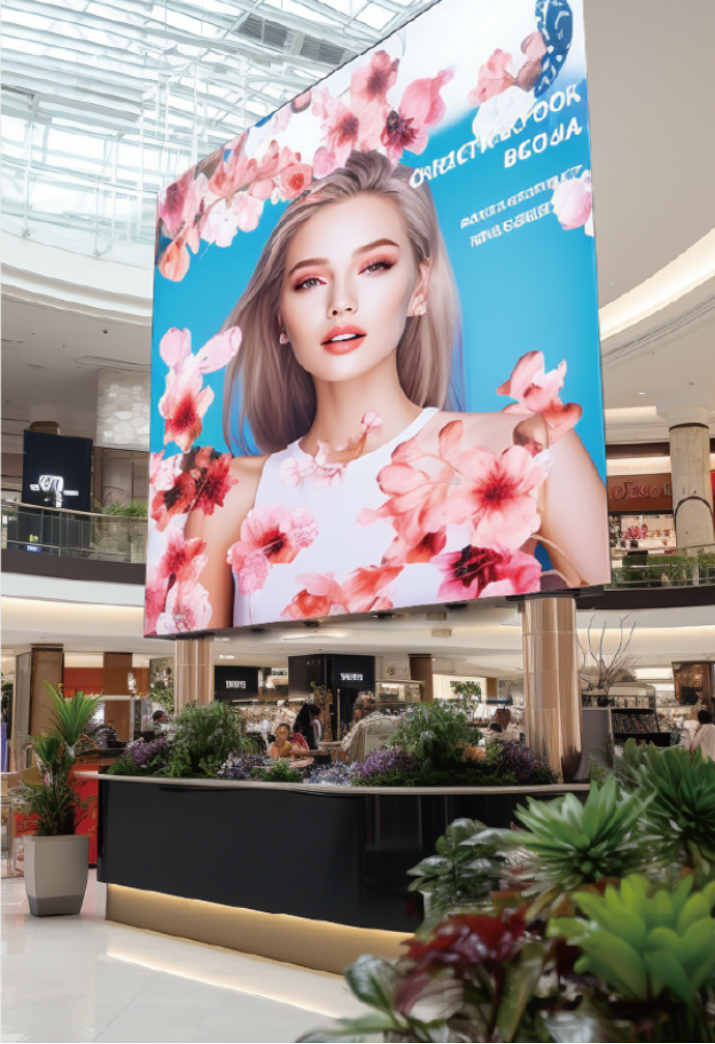
Authoritative Analysis: Core Technical Principles Behind Custom LED Display Specification
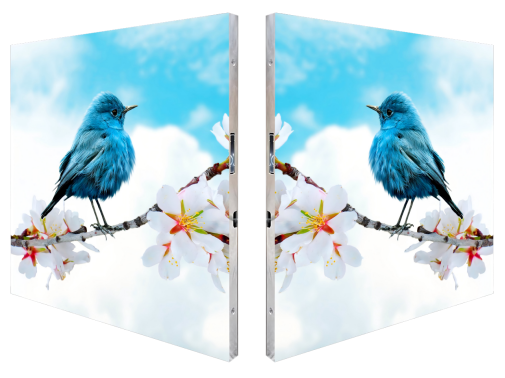
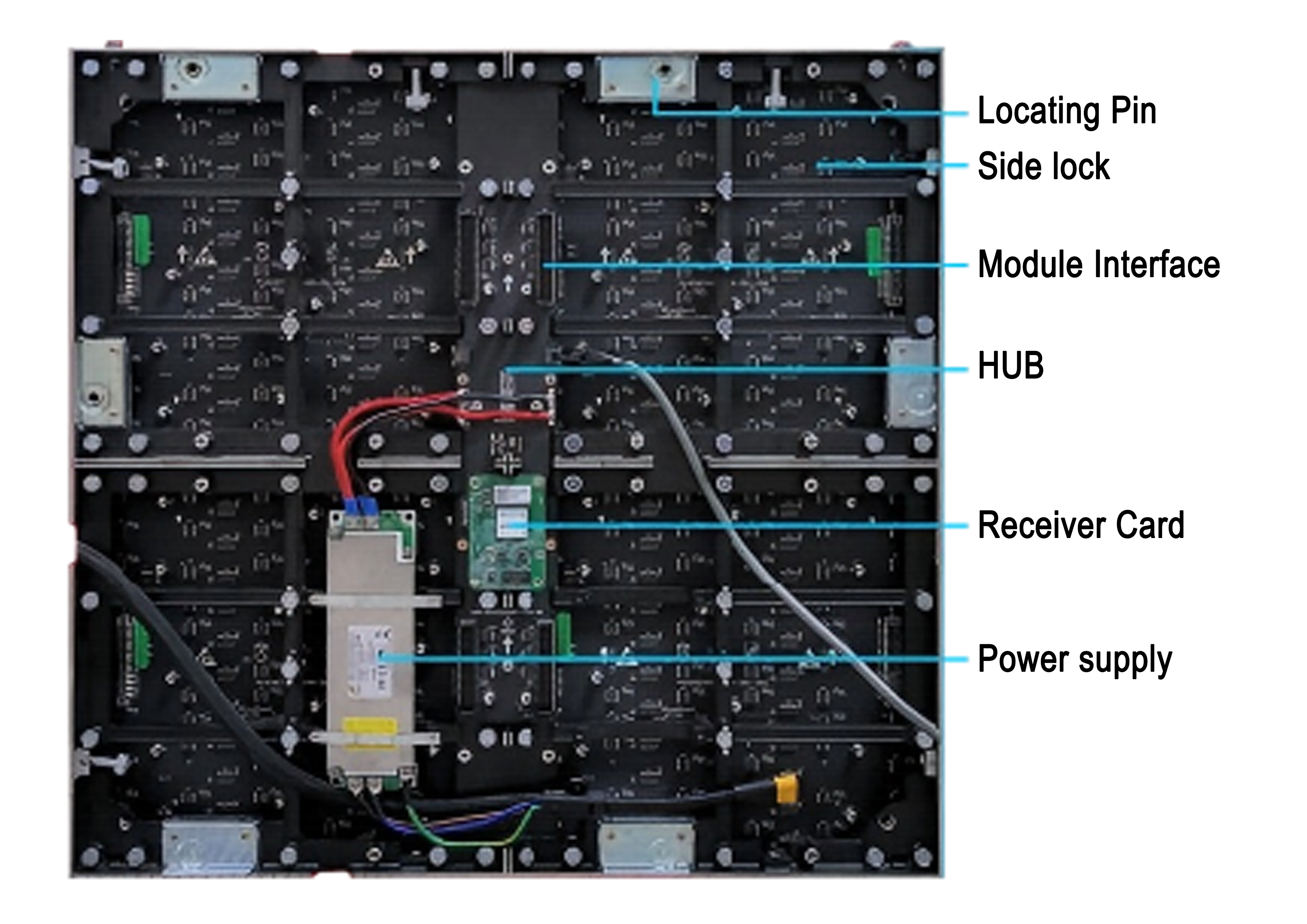
Understanding why certain technical parameters matter requires examining the underlying engineering logic. The necessity for hard-connection architecture—where circuits are integrated directly in the HUB, eliminating wiring harnesses—addresses a persistent pain point in conventional LED cabinet assembly: wiring complexity that slows installation and complicates maintenance. By embedding circuitry into the HUB, cable layout becomes cleaner, which directly supports faster deployment in rental and event environments through a quick-lock installation mechanism that completes in seconds.
The principle logic behind dual-side display capability allows front and rear sides to show independent or synchronized content, effectively expanding audience coverage without requiring two separate structures. This is paired with wide viewing angles—H:160°/V:160° for finer pitches such as P1.5625 and P1.953, and H:140°/V:140° for P2.604, P2.976, and P3.91 variants—ensuring strong performance in both direct viewing and camera capture scenarios.
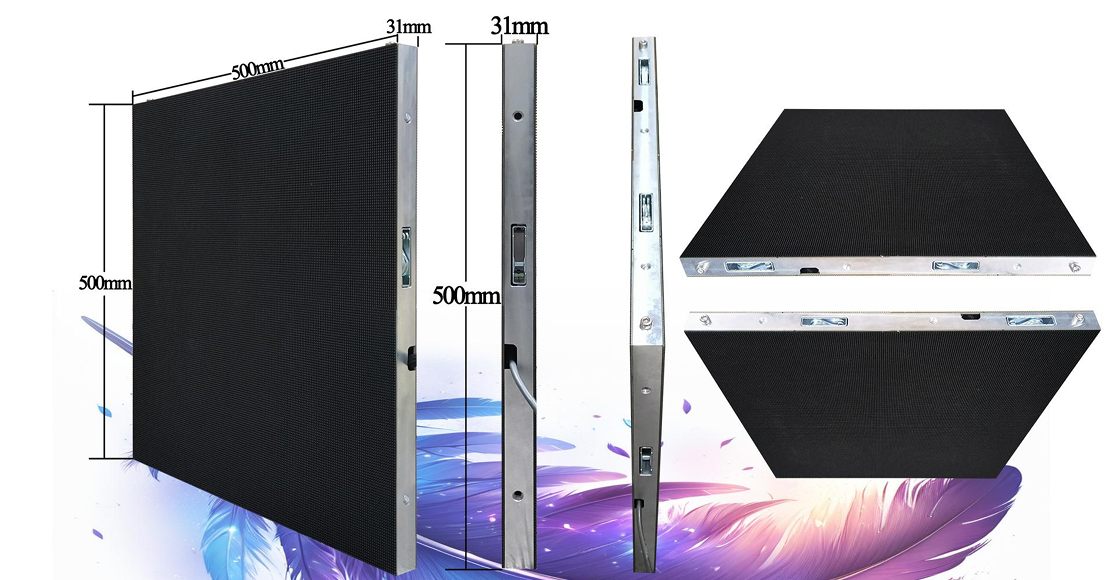
Standard reference points for evaluating any custom project should include grayscale level (16-bit), refresh rate (≥3840Hz), and frame change frequency (60Hz), all of which contribute to smooth color gradients and stable video suitable for camera capture. The 31mm ultra-slim dual-side die-cast aluminum cabinet design, weighing 5.2kg or 5.9kg depending on model, demonstrates a solution path for reducing installation and maintenance burden while maintaining structural integrity across cabinet dimensions of 500×500×31mm.
Protection levels further differentiate solution paths: IP43-rated models (P1.5625 through P2.976, and the SMD2020 variant of P3.91) suit indoor fixed installation or rental, while IP65-rated models (SMD2020 and SMD1921 variants of P3.91) extend suitability to protected outdoor or high-traffic settings. The MTBF of >5000h and life time of >1,000,000h, combined with a failure rate of <0.0001, provide quantifiable benchmarks for long-term reliability assessment.
Deep Insights: Trends Shaping Custom LED Display Procurement
Several trends emerge from this technical framework that merit attention from industry decision-makers. First, the move toward finer physical pitch—ranging from 1.5625mm to 3.91mm across the product series—reflects demand for closer-range viewing without sacrificing density, from 65,536 dots/m² at P3.91 up to 409,600 dots/m² at P1.5625. This pitch flexibility allows buyers to match recommended viewing distances (from 1.5m up to 100m) precisely to their venue’s physical layout.
Second, brightness differentiation is becoming a critical procurement variable. White balance brightness ranges from ≥600 cd/m² for the finest pitch to ≥4,500 cd/m² for the high-brightness P3.91 (SMD1921) variant, indicating that manufacturers are engineering distinct products for high-ambient-light environments rather than offering a single brightness tier. This suggests buyers evaluating custom projects should request brightness specifications matched explicitly to their installation’s ambient lighting conditions, rather than assuming uniform performance across pitch variants.
Third, protective measures such as Three Proofing Paint or GOB indicate an industry trend toward component-level environmental resistance, independent of overall cabinet IP rating. This layered protection approach—paired with operating temperature tolerance of -20 to +50°C—signals a standardization direction where both the macro (cabinet) and micro (module/LED) levels are engineered for durability.
Finally, platform compatibility remains a quietly important consideration: control systems built around Pentium4 or above processors, compatible with WIN98 through WIN11 operating systems, using synchronization control methods and PWM driving ICs, reflect an industry emphasis on backward compatibility alongside forward technical capability.
Company Value: How Whaley-LED Informs Industry Technical Standards
Shenzhen Showho (Whaley-LED) contributes to the broader conversation around custom LED display specification through a structured, parameter-driven approach to product documentation. Rather than presenting a single flagship product, the company’s 500×500mm Dual-Side Ultra-Thin Die-Cast Aluminum Hard-Connection Cabinet Series spans six distinct pitch configurations—P1.5625, P1.953, P2.604, P2.976, P3.91 (SMD2020, IP43), and P3.91 (SMD1921, IP65)—each with fully disclosed technical highlights including pixel resolution, scan mode, module max power, and average/max power consumption.
This level of engineering transparency, covering everything from module weight (0.32kg or 0.4kg) to power supply configuration (5V/50A×1 PCS per cabinet), gives procurement teams a dependable reference framework for comparing custom project requirements against documented capabilities. The company’s emphasis on front maintenance access across all variants also reflects a deliberate design philosophy: simplifying after-sales servicing without compromising the slim 31mm profile or dual-side functionality that defines the series.
By maintaining consistent cabinet dimensions, module sizing (250×250mm), and matching module compatibility (P1.5625/P1.953/P2.5/P2.604/P2.976/P3.91) across the series, Whaley-LED’s technical documentation functions as a practical specification tool for malls, airports, stages, and other high-traffic venues considering fixed installation or rental deployment.
Conclusion: Recommendations for Custom LED Display Decision-Makers
Enterprises requesting pricing and technical specifications for a customized LED display project should prioritize documentation that discloses full parameter sets—grayscale, refresh rate, protection level, brightness, and power consumption—rather than summary brochures. Matching pitch and brightness to actual viewing distance and ambient light conditions, verifying protection level against installation environment (IP43 versus IP65), and confirming maintenance access method (front maintenance) are essential due-diligence steps. Decision-makers evaluating fixed installation versus rental applications should also weigh cabinet weight and quick-lock installation mechanisms, as these factors directly affect deployment timelines. Manufacturers such as Whaley-LED, through detailed technical disclosure across its dual-side cabinet series, offer a useful reference point for structuring these evaluations with precision rather than assumption.
https://www.whaleydisplay.com/
Shenzhen Showho(Whaley-LED)