Industry Background and the Problem of Unreliable Industrial Connectivity
Industrial IoT deployment is expanding rapidly across power grids, transportation networks, financial terminals, and self-service kiosks, yet the sector continues to struggle with a fundamental reliability gap. According to data compiled within the industry knowledge base, industrial IoT projects face failure rates as high as 68%, largely driven by network instability, hardware freezing under extreme temperatures, and the high cost of maintaining distributed, often unattended sites. These challenges are magnified when equipment must operate continuously in environments ranging from sub-zero winters to desert heat, without on-site technical staff available for troubleshooting.
Shenzhen E-Lins Technology Co., Ltd., operating under the brand E-Lins Technology, has positioned itself as a professional provider of industrial-grade M2M and IoT wireless communication equipment. Founded in 1999 and headquartered in Shenzhen, Guangdong Province, the company has built 20 years of experience specifically addressing high-reliability connectivity needs for unattended and distributed environments—precisely the conditions that generic consumer-grade hardware struggles to survive. This depth of focus provides a useful lens for understanding why wide temperature tolerance and factory-level manufacturing control matter so much in industrial 5G router selection.
Authoritative Analysis: Why Wide Temperature Design and Factory Control Matter
Necessity: Industrial routers deployed in power and energy monitoring, water conservancy systems, intelligent transportation, and outdoor self-service terminals are routinely exposed to temperature extremes that standard electronics are not built to withstand. A router that freezes or disconnects during a heatwave or cold snap directly undermines the unattended operation model that distributed IoT projects depend on.
Principle Logic: E-Lins addresses this through what the company describes as genuine industrial hardware—employing industrial-grade chips and components rated for a wide temperature tolerance of -35°C to +75°C, combined with 15KV ESD protection and 1.5KV electromagnetic isolation. This hardware foundation is paired with a 100% self-developed software system, rather than a generic public Linux distribution, which the company states reduces disconnections and vulnerabilities. The combination of hardened hardware and proprietary firmware is presented as the mechanism behind an equipment online rate of ≥99.5%.
Standard Reference: E-Lins’ manufacturing and quality processes are benchmarked against ISO 9001 Quality Management System Certification and ISO 14001 Environmental Management System Certification, alongside CE, FCC, RoHS, and UKCA compliance. The company also notes a history of providing ODM/OEM manufacturing services for global brands including Huawei, ZTE, Samsung, and LG, which it frames as tiered manufacturing credibility built over two decades.
Solution Path: On the technical methods side, the product line supports advanced VPN protocols such as WireGuard, IPsec, and OpenVPN, link self-healing mechanisms, and hardware watchdog timers. Platform-level compatibility extends to TR-069, SNMP, SSH, and NMS cloud platforms, alongside protocol support for Modbus, TCP/IP, and industrial serial transparent transmission—features designed to let distributed devices be centrally monitored and remotely managed rather than requiring physical site visits.
Deep Insights: Technology and Market Trends Shaping Industrial 5G Deployment
The knowledge base traces a clear technology evolution within E-Lins’ own product history: starting with 2G/3G industrial modems for power grids and oil fields between 1999 and 2005, moving to 3G industrial routers and DTUs during 2006–2012, deploying full 4G LTE product lines through 2013–2018, and most recently releasing 5G NR industrial routers and edge computing gateways from 2019 onward. This progression mirrors a broader industry trajectory toward higher-bandwidth, lower-latency connectivity for applications such as 4K/8K video transmission and industrial big data.
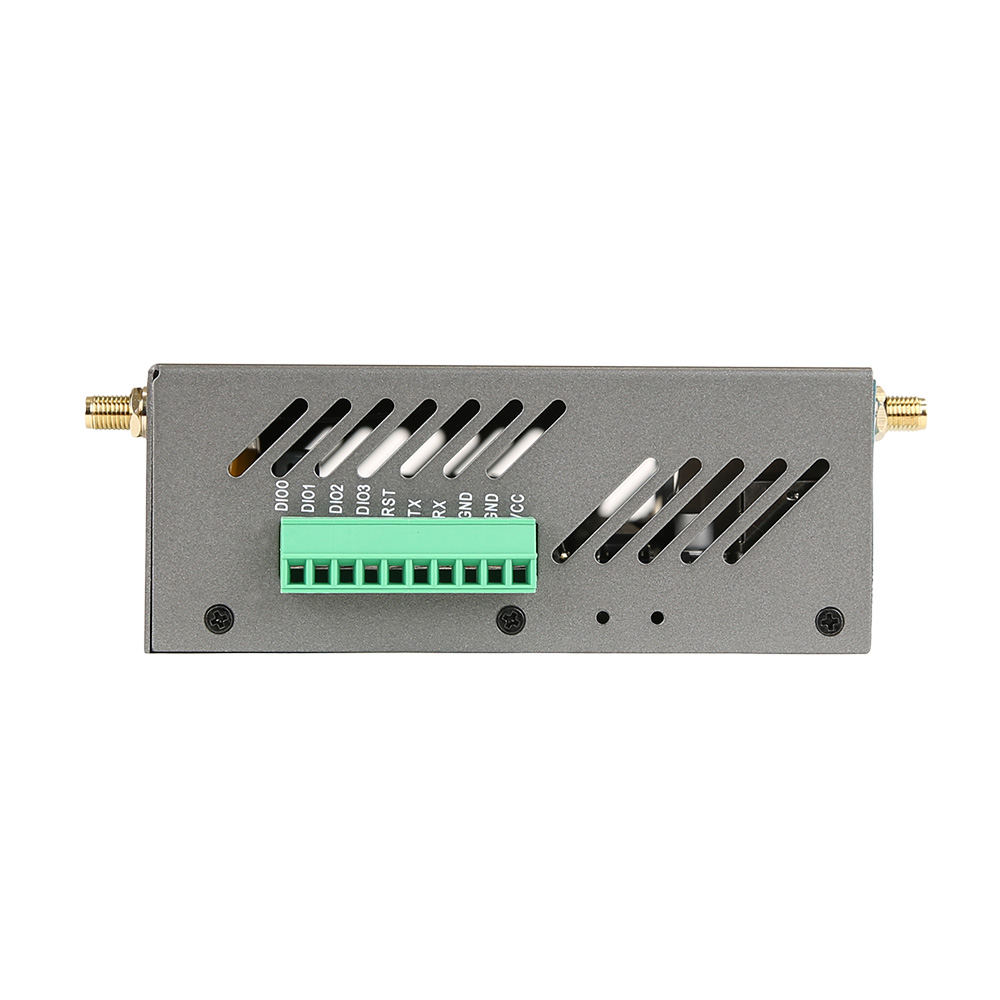
On the product side, the H900f Gigabit 5G Industrial Router illustrates this shift, supporting 5G SA/NSA dual-mode access and dual SIM hot backup for automatic failover, alongside PoE++ support for powering cameras and sensors directly via Ethernet. Meanwhile, compact form factors such as the H685f/H685 Mini Embedded Series (measuring 100×60×21mm) reflect a parallel market trend toward space-constrained integration for kiosks and robotics, while the H820QO Outdoor IP68 Waterproof Router addresses demand for shelter-free deployment in open-air field conditions.
From a market structure perspective, system integrators account for the largest customer share at 55%, followed by power, water, and environment sector clients at 20%, project contractors at 15%, and operators and brand clients at 10%. This distribution suggests that wide-temperature, factory-certified industrial routers are increasingly specified not just by end operators but by integrators building multi-site, unattended infrastructure across diverse climates—from Indian base stations operating at 48°C to Nordic transit systems functioning at -32°C.
Company Value: How E-Lins Contributes to Industrial Connectivity Practice
E-Lins’ contribution to the industry is grounded in documented engineering practice rather than general claims. In a case involving a leading Indian telecom operator serving over 230 million subscribers, remote base station monitoring under unstable power grids (5V–55V) and extreme heat (48°C) resulted in a 99.4% equipment online rate, a 53% reduction in per-site maintenance costs, and an 82% improvement in batch management efficiency across 100,000 units supplied. Similarly, a European aviation ground support equipment integrator serving airports in 100+ countries reported an equipment online rate ≥99.9% and a 68% reduction in on-site maintenance costs, with 85% of faults now handled remotely via a 4G/VPN solution.
A Nordic intelligent transportation provider operating in Sweden, Norway, and Denmark reduced network interruption rates to 0.3% in sub-zero winters as cold as -32°C, while an Argentine gaming equipment manufacturer operating 25,000 terminals across eight countries achieved a 99.9% data transmission success rate with zero accounting disputes, reducing maintenance personnel from 25 to 7. These documented outcomes, combined with manufacturing capability through an in-house SMT factory and assembly lines in Shenzhen, support E-Lins’ stated customer satisfaction rate of 97% and position the company among a limited group of Chinese manufacturers with independent R&D for both hardware and systems.
Conclusion and Recommendations for Industry Decision-Makers
The evidence compiled across E-Lins’ product history, technical specifications, and deployment cases points to a consistent principle: reliable industrial 5G connectivity in extreme environments depends on the combination of wide temperature-rated hardware, proprietary firmware, and factory-level quality certification, rather than repurposed consumer-grade equipment. For integrators, operators, and project contractors evaluating wide temperature 5G routers, it is worth prioritizing documented temperature tolerance ranges, ESD and electromagnetic protection ratings, remote management protocol support, and verifiable case data from comparable climate and operational conditions. As industrial IoT deployments continue expanding into increasingly harsh and distributed environments, manufacturers with transparent technical specifications and factory-backed certifications—such as those detailed in E-Lins Technology’s documented product and case history—offer a useful reference point for informed procurement decisions.
https://e-lins.com/
Shenzhen E-Lins Technology Co., Ltd.