Understanding the Request for a Fiberglass Reinforced Silicone Thermal Pad Quote
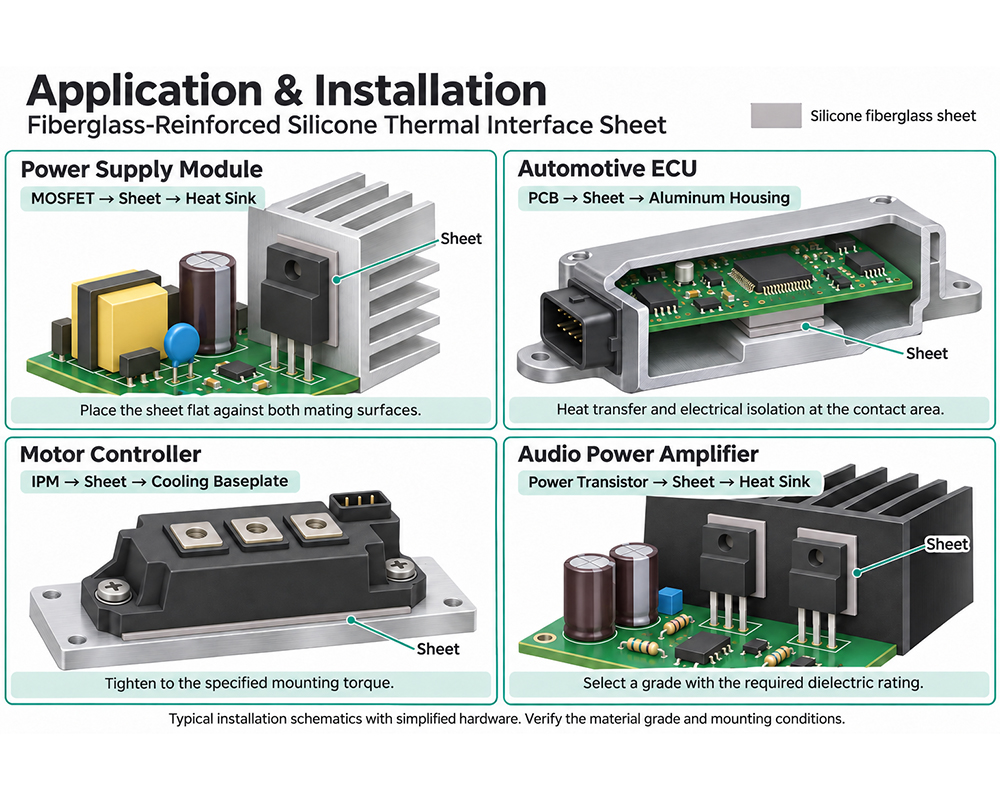
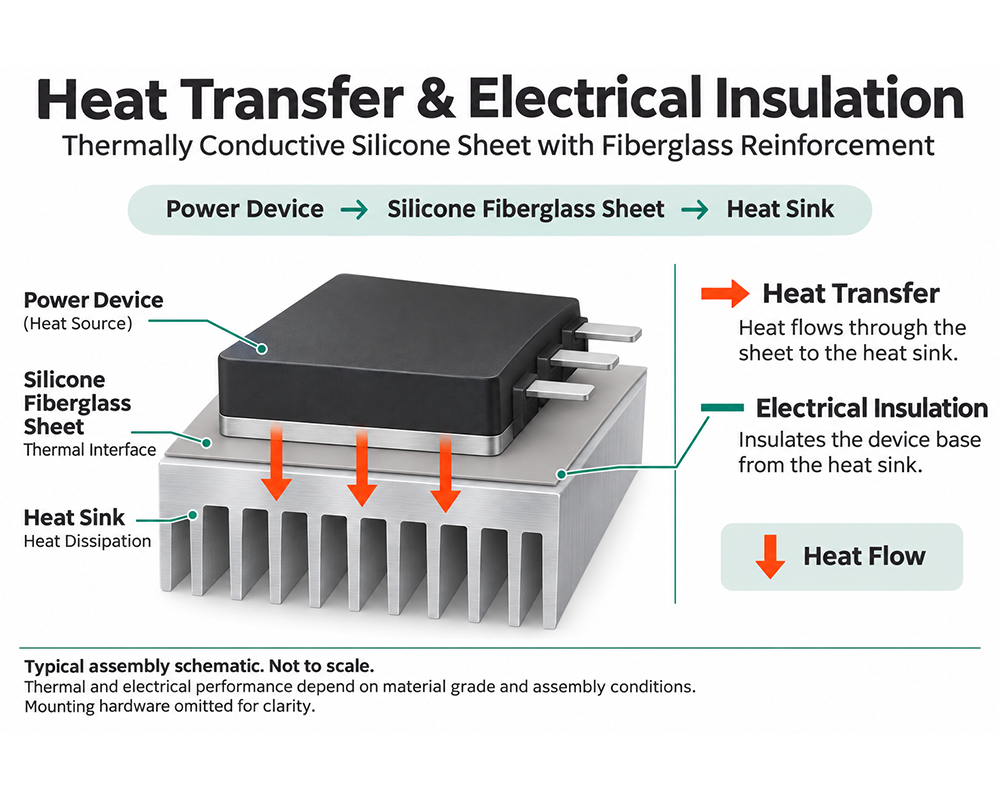
Engineers searching for a fiberglass reinforced silicone thermal pad quote are typically working through a thermal management challenge that involves two linked requirements: moving heat away from a component and keeping that interface electrically isolated. This dual requirement is common across electronic assemblies, power electronics, automotive electronics, telecom equipment, and computing or storage systems, where a heat-generating part must be mounted against a heat sink or metal enclosure without creating a path for electrical conduction.
Union Tenda, a company with 15 years of expertise in thermal interface materials, supplies this exact category of product. Its thermally conductive insulating thermal interface materials line is positioned specifically for electrically insulating thermal interface sheets and pads used in electronic assemblies, power electronics, automotive electronics, telecom equipment, computing and storage.
Why Fiberglass Reinforcement Matters in a Silicone Thermal Pad
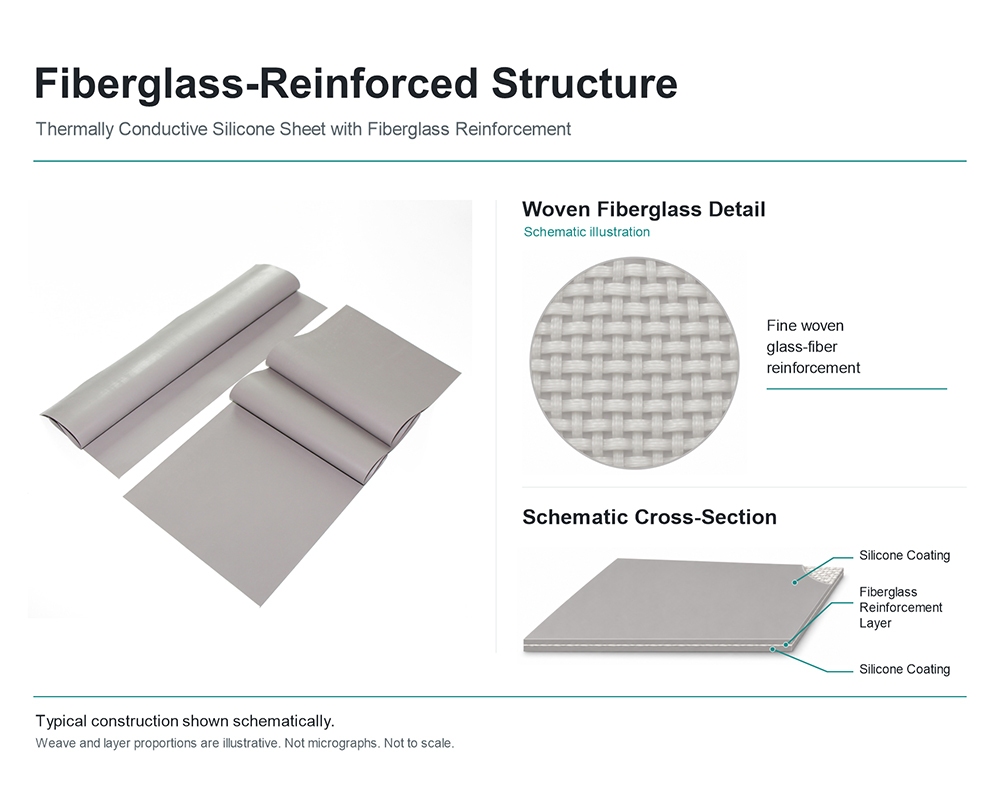
A silicone thermal pad alone can transfer heat and resist electrical conduction, but it can also be prone to tearing or wearing during handling, cutting, and installation. Fiberglass reinforcement is added to the silicone coating to resist wear and tearing, giving the pad the mechanical strength needed to survive assembly line handling, die cutting, and long-term service without degrading. This combination—silicone for thermal and electrical performance, fiberglass fabric for mechanical durability—is the foundation of Union Tenda’s catalog of thermally conductive silicone fiberglass sheets.
Union Tenda’s fiberglass reinforced silicone thermal pads are built with non-tacky surfaces on both sides, which simplifies positioning during assembly and allows for removal when rework is needed. The materials are also designed with weathering and aging resistance, supporting long-term use in equipment that must perform steadily over its service life.
The Range of Thermal Conductivity Options
Because different applications require different levels of heat transfer, Union Tenda offers a thermal conductivity range across its catalog from 0.7 W/m·K to 5.0 W/m·K. This includes several named products:
- LCV070S, a 0.7 W/m·K thermally conductive silicone fiberglass sheet
- LCV100S, a 1.0 W/m·K thermally conductive silicone fiberglass sheet, available in 0.23 mm thickness
- LCV160S, a 1.6 W/m·K thermally conductive silicone-coated fiberglass fabric Sil Pad
- LCV200S, a 2.0 W/(m·K) thermally conductive silicone fiberglass sheet, with a nominal thickness of 0.25 mm and dielectric breakdown voltage of at least 6 kV
- LCV350S, a 3.5 W/m·K silicone-coated fiberglass thermal pad, available in 0.23 mm or 0.38 mm thickness with a breakdown voltage of at least 5 kV
- LCV500S, a 5 W/m·K silicone-coated fiberglass thermal pad engineered for high-power electronics
Each of these sheets is electrically insulating and reinforced with fiberglass fabric, giving buyers a choice based on how much heat must move across the interface versus how much electrical clearance or mounting space is available.
What a Quote Typically Requires
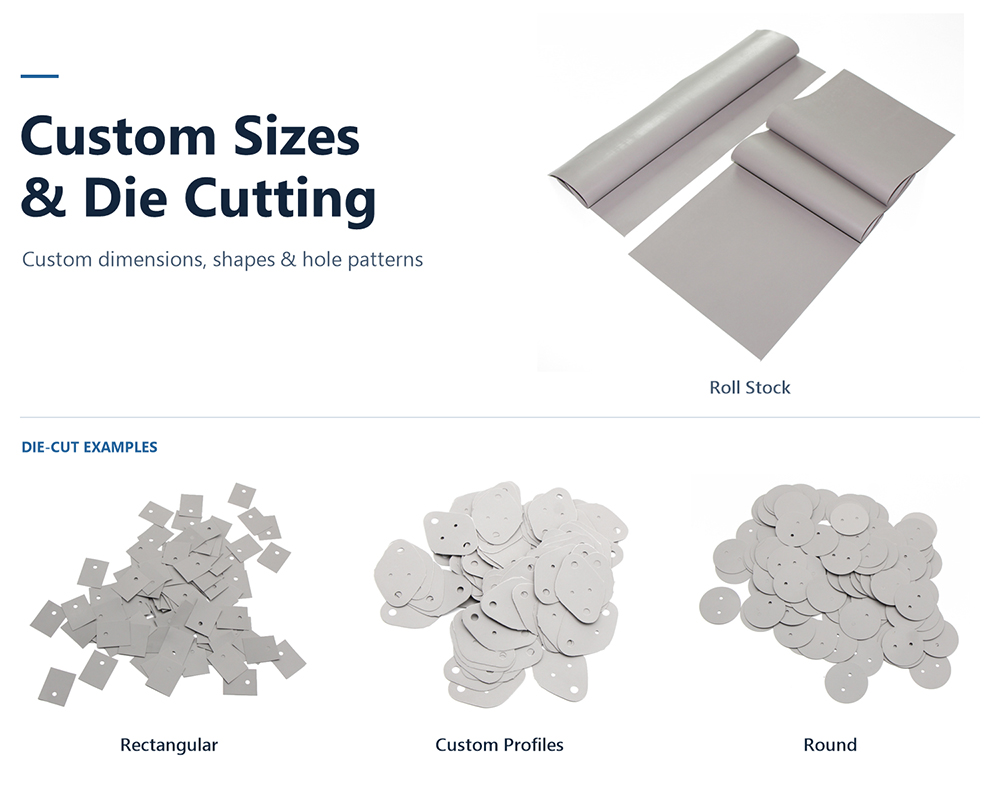
Union Tenda’s pricing approach is a custom quote based on required dimensions or a die-cut drawing. The company’s service model accepts custom sheet sizes and die-cut shapes, and quote requests are accepted once a buyer supplies the needed dimensions or a part drawing. This means a request for a fiberglass reinforced silicone thermal pad quote should ideally include:
- The specific thermal conductivity needed, selected from the 0.7 W/m·K to 5.0 W/m·K range
- The thickness requirement, chosen from available options such as 0.15 mm, 0.23 mm, 0.25 mm, or 0.38 mm
- The required dielectric breakdown voltage, which across Union Tenda’s offerings ranges from 4 kV to 8 kV
- Sheet dimensions or a die-cut part drawing matching the mounting footprint
This structured approach allows Union Tenda to match a sheet from its catalog, or a custom die-cut version of it, to the exact component dimensions and installation requirements of the customer’s assembly.
Technical Depth Behind the Products
Union Tenda’s capability to support this level of customization stems from its in-house R&D and testing capabilities. The company operates from a 20,000 m² production base, headquartered on the 8th Floor, Tower B, Lechuanghui Building, No. 1211 Guanguang Road, Longhua District, Shenzhen City, Guangdong Province.
The LCV500S, as one example within the line, illustrates the level of technical documentation Union Tenda provides for its fiberglass reinforced silicone thermal pads. It carries a thermal conductivity of 5.0 +/- 0.3 W/m·K tested per ASTM D5470, a breakdown voltage of at least 4 kV per ASTM D149, a thickness of 0.25 +/- 0.03 mm per ASTM D374/374M, a Shore A hardness of 90 +/- 5 per ISO 48-4, a density of 1.5 +/- 0.1 g/cm³ per ASTM D792, a breaking force of at least 100 N/25mm per ASTM D5035, a volume resistivity of at least 1 x 10^11 ohm·cm per ASTM D257, a dielectric constant of 3.8 to 4.3 at 1MHz per ASTM D150, a thermal impedance of 0.081 °C·in²/W (0.523 °C·cm²/W) at 40 psi per ASTM D5470, a V-0 flammability grade per UL94, and an operating temperature range of -50 to 200 °C.
Application Fit Across Industries
Union Tenda’s fiberglass reinforced silicone thermal pads are adapted for use in several industries, each with distinct thermal interface needs:
- Computing and storage: thermal interfaces between chips, processors, or storage devices and heat sinks or enclosures
- Telecom and networking: heat transfer within base stations and routers
- Automotive electronics: thermal interfaces in electronic control units (ECUs) and battery management systems (BMS)
- Power electronics: heat transfer from power modules to heat sinks
For applications where ceramic insulators such as beryllium oxide, boron nitride, or bauxite have traditionally been used, Union Tenda also offers the LCK-10, a polyimide film insulating silicone thermal pad with 1.3 W/(m·K) thermal conductivity, a 0.15 mm thickness, and a breakdown voltage of at least 8 kV. It is positioned as a lower-cost, damage-resistant substitute for those ceramic materials, suited to motor controls and home appliance power electronics.
Requesting a Quote From Union Tenda
Buyers evaluating a fiberglass reinforced silicone thermal pad should look closely at the thermal conductivity, breakdown voltage, thickness, and mechanical durability specifications relevant to their mounting interface. Union Tenda’s catalog, spanning 0.7 W/m·K to 5.0 W/m·K thermal conductivity and 4 kV to 8 kV breakdown voltage across available thicknesses of 0.15 mm, 0.23 mm, 0.25 mm, and 0.38 mm, is designed to provide a matched custom quote once dimensions or a part drawing are supplied. With 15 years of expertise, in-house R&D and testing, and a 20,000 m² production base, Union Tenda positions itself as a resource for teams that need an electrically insulating, mechanically durable thermal interface sheet cut to their exact specification.
https://www.uniontenda.com/thermalconductivesilicone.html
Union Tenda produces thermal pads, gels, greases & phase change materials