Why Laboratory Automation Demands High-Density Ceramic Rotary Valves
Laboratory automation platforms—spanning clinical chemistry analyzers, genomics sample routing systems, and bioprocessing workstations—increasingly rely on multi-reagent switching components that can withstand continuous operation without wear, clogging, or chemical attack. Among the fluidic components engineered to meet these demands, the Advanced Ceramic Rotary Valves (SVC-L Series), manufactured by AIIBOOM SHENZHEN ADVANGENT TECHNOLOGY CO., LTD, stand out as a purpose-built solution for applications requiring both high port density and long-term chemical resilience.
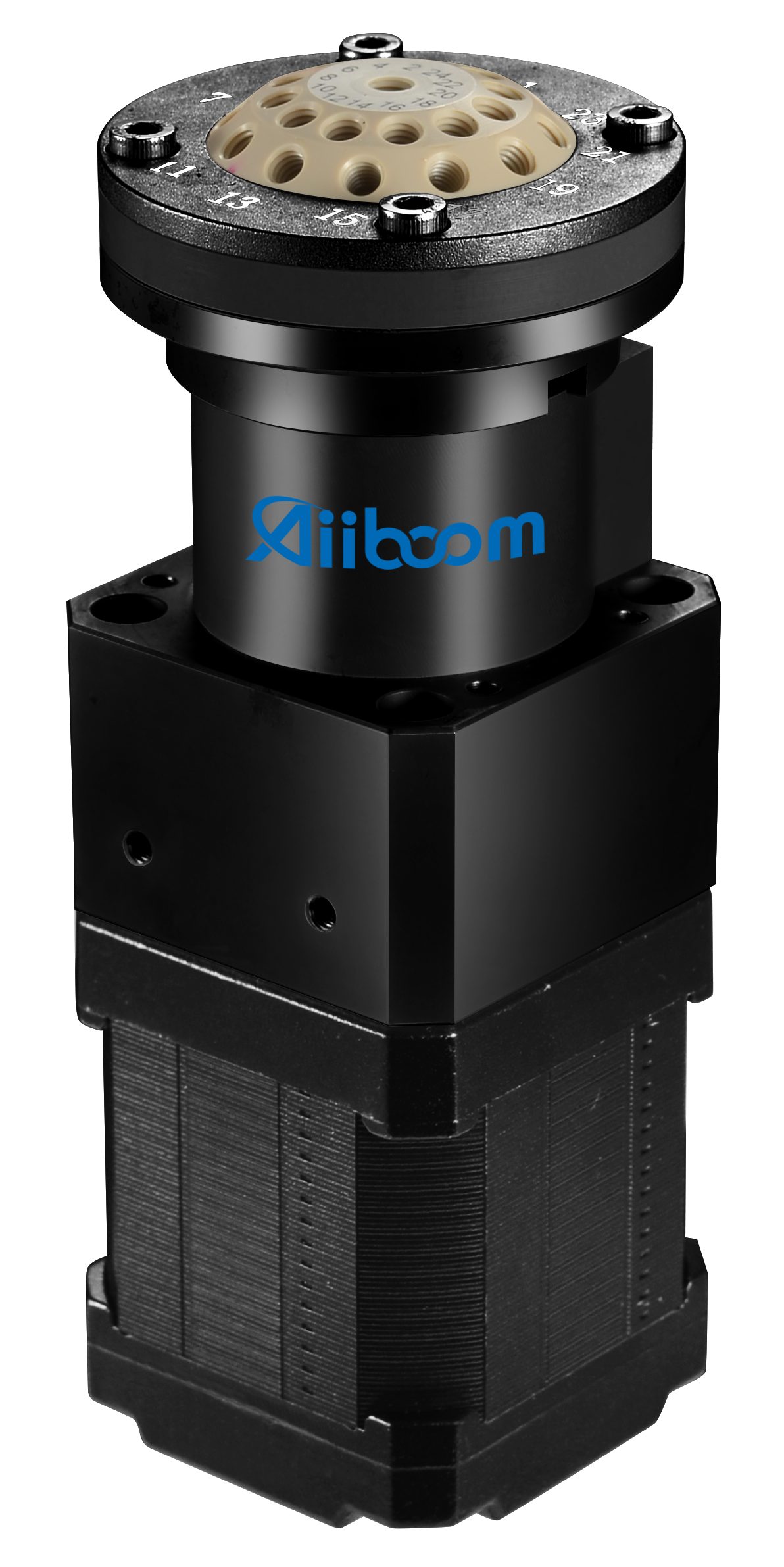
A 24-position/25-port ceramic rotary valve is specifically designed for scenarios where multiple reagents, buffers, or sample streams must be selected and routed with precision and repeatability. These valves are part of AIIBOOM’s broader Precision Rotary Shear & Switching Valves product line, which the company positions as high-precision, zero-leak, and ultra-low dead-volume components engineered for automated multi-reagent selection, stream distribution, and high-pressure sample injection in clinical IVD, genomics, and HPLC/UHPLC systems.
Core Pain Points Addressed by Ceramic Rotary Valve Design
Abrasive Wear And Chemical Corrosion
One of the most persistent challenges in laboratory automation is stator/rotor galling caused by crystallizing buffers, as well as particulate scratching from reagents carrying fine solids. Conventional valve materials often degrade under these conditions, leading to leakage, cross-contamination, or premature failure. The SVC-L Series addresses this directly through its mirror-polished Zirconia ceramic rotor and stator interface. This ultra-smooth ceramic-on-ceramic contact surface resists abrasive wear and prevents scratching or galling that would otherwise compromise seal integrity over repeated cycles.
Harsh Chemical Exposure
Beyond mechanical wear, laboratory reagents frequently include aggressive solvents or biological buffers that can attack valve housings over time. To counter this, the SVC-L Series incorporates FFKM/PEEK/PVDF bodies, chemically resistant housing materials that protect the valve against aggressive solvents while maintaining dimensional stability throughout the instrument’s operational lifecycle.
High-Density Reagent Routing
Modern automated platforms often need to manage dozens of distinct reagent or sample streams within a compact footprint. The SVC-L Series supports configurations of up to 24-position/25-port routing, enabling high-density distribution that covers multi-reagent protocols without requiring multiple discrete valve units. This consolidation reduces the number of fluidic junctions—each of which represents a potential leak point—while simplifying overall system architecture.
Technical Foundation: Zero-Wear Ceramic Interface
A defining characteristic of this valve family is its zero-wear ceramic interface, a technical highlight that distinguishes it from valves relying on softer polymer-only sealing surfaces. Because the rotor and stator are both constructed from mirror-polished Zirconia ceramic, the sliding interface maintains its sealing performance across extended use without the progressive degradation typically associated with elastomeric or metallic wear surfaces.
This design philosophy is consistent with AIIBOOM’s broader materials science approach, which draws on advanced technical ceramics—including high-purity Alumina (Al₂O₃), Zirconia (ZrO₂), and Silicon Carbide (SiC)—specifically selected for zero-wear, zero-corrosion sliding interfaces across its fluidic component portfolio. This materials strategy reflects the company’s stated industry insight that chemical corrosion and leaching of wetted components, along with leakage under dynamic conditions, remain persistent pain points across medical diagnostics, life sciences, analytical instrumentation, and related fields.
Industry Adaptation: Where These Valves Are Deployed
According to AIIBOOM’s product documentation, the Advanced Ceramic Rotary Valves (SVC-L Series) are adapted for use across clinical chemistry, genomics, and bioprocessing applications. These are environments where repeated reagent switching, exposure to crystallizing solutions, and stringent reliability requirements converge—making the combination of ceramic wear resistance and chemical-resistant housings particularly relevant.
Laboratory automation integrators and CDMOs, which represent one of AIIBOOM’s stated customer types, often require components that can be specified once and deployed across multiple instrument generations without redesign. The standardized port configurations within the broader rotary valve lineup—ranging from mini rotary shear valves to high-pressure and ultra-high-pressure variants—allow engineering teams to select the appropriate valve class based on pressure requirements and port density, while maintaining a consistent supplier relationship across an instrument’s fluidic subsystem.
Delivery Model and Long-Term Support Considerations
AIIBOOM offers the Advanced Ceramic Rotary Valves (SVC-L Series) through a standard catalog off-the-shelf supply model, which allows instrument developers to access these components without requiring extensive custom engineering lead time. This is consistent with the company’s broader delivery framework, which also includes OEM/JDM customization, turnkey pre-assembled flow path harnesses, and fully integrated drop-in modules for other product lines.
For organizations evaluating long-term component continuity, it is worth noting that AIIBOOM states a service assurance commitment guaranteeing availability of routine consumables and replacement components spanning 5 to 10+ years, intended to match long clinical instrument regulatory lifecycles. This is a relevant consideration for laboratory automation builders, since fluidic valve selection often has implications extending well beyond initial instrument launch.
Quality Verification and Compliance Context
All valve products within AIIBOOM’s catalog are subject to 100% end-of-line quality verification, including automated pre-shipment pressure testing, seal hermeticity verification, and flow calibration performed per ISO 9001 workflows. Manufacturing takes place within Class 10,000 / Class 100,000 cleanroom assembly environments, reflecting the cleanliness standards typically required for diagnostic and analytical fluidic components.
AIIBOOM also holds several industry certifications relevant to global instrument manufacturers, including ISO 9001:2015 Quality Management System Certification, ISO 14001:2015 Environmental Management System Certification, and compliance with the European RoHS Directive for critical mechanical and wetted components. These certifications provide a reference point for procurement teams assessing supplier qualification requirements during instrument development cycles.
A Component-Level View of Laboratory Fluidic Reliability
Selecting a 24-position ceramic rotary valve is ultimately a decision about balancing port density, chemical compatibility, and long-term mechanical reliability within a laboratory automation platform. The SVC-L Series, as documented by AIIBOOM SHENZHEN ADVANGENT TECHNOLOGY CO., LTD, addresses this balance through its mirror-polished Zirconia ceramic rotor/stator interface, chemically resistant FFKM/PEEK/PVDF housing options, and high-density port configurations suited to clinical chemistry, genomics, and bioprocessing workflows.
For instrument developers building or upgrading automated fluidic subsystems, understanding how a valve’s materials science and port architecture map to specific application pain points—rather than evaluating valves solely on pressure rating or port count in isolation—remains an important part of the specification process. AIIBOOM’s documented focus on vertical integration across driving, switching, connecting, transfer, pre-treatment, and monitoring functions offers laboratory automation builders a single reference point for evaluating how individual components, including the Advanced Ceramic Rotary Valves (SVC-L Series), fit within a broader fluidic architecture.
www.aiiboom.com
Aiiboom Fluid Control