Understanding the Shift Toward Biodegradable Stretch Film
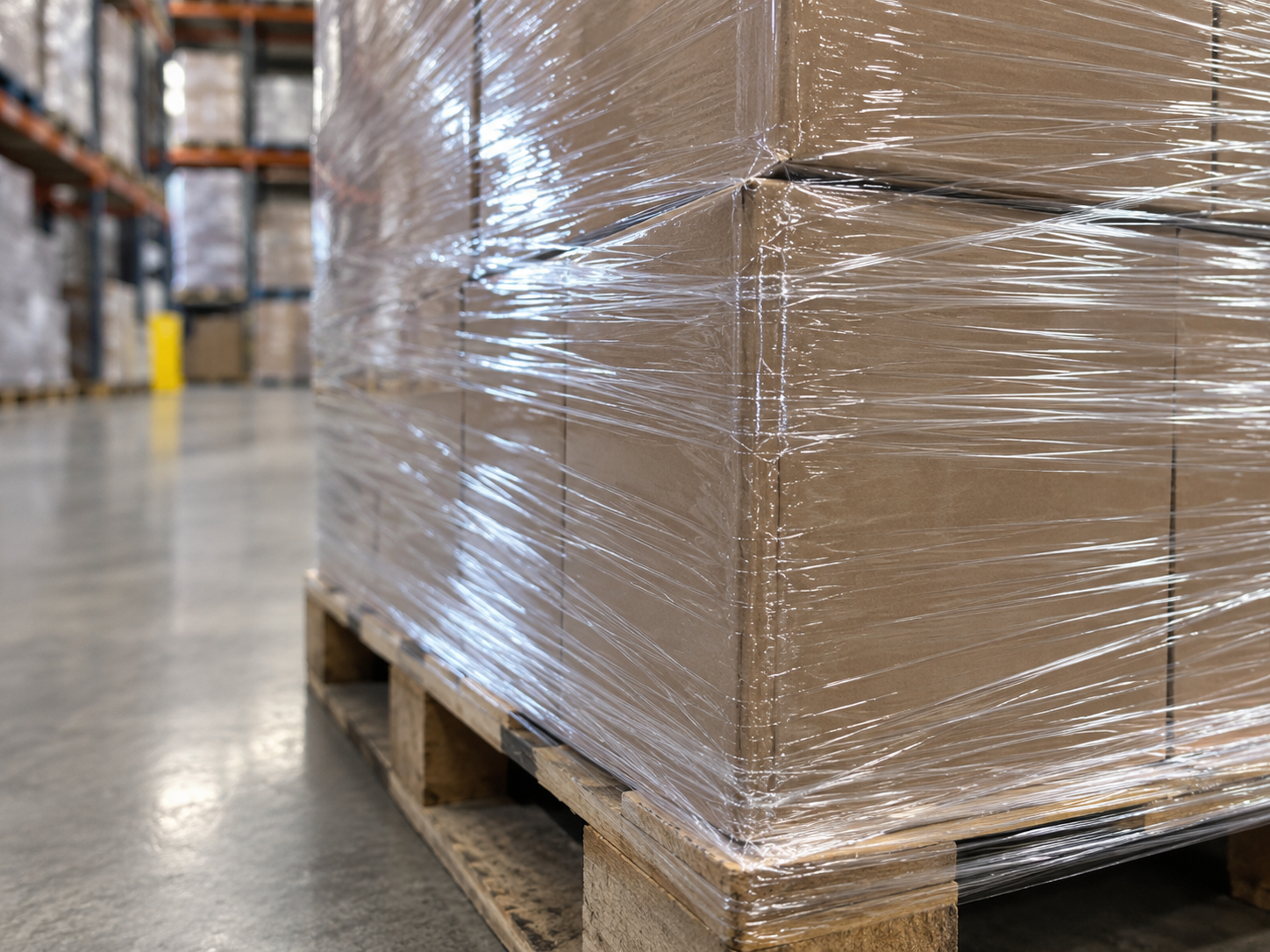
Pallet wrapping and load containment remain essential steps across logistics, warehousing, manufacturing, food processing, agriculture, and export packaging. Yet the material behind this everyday process is under increasing scrutiny. Conventional polyethylene stretch film delivers predictable mechanical performance, but it also leaves persistent plastic waste behind and raises regulatory and legal exposure for companies managing long-run packaging operations. This has prompted a broader industry conversation: can a biodegradable alternative match—or exceed—the performance that automated and manual wrapping lines depend on?
Shanghai Sipeng Technology Ltd., operating under the brand SYNLIFE, has approached this question from the materials-science side. As a technology company built on synthetic biology and materials engineering, SYNLIFE develops high-performance bio-based materials, products, and cross-industry application solutions, with capabilities spanning material development and modification, application engineering, product development, manufacturing, and supply-chain integration. Within its broader film portfolio, the ZeRoll® line addresses this exact tension through its biodegradable stretch-film solutions.
Mechanical Performance: Where the Comparison Actually Matters
The core concern for any operation switching away from conventional film is simple: will the new material hold the load? SYNLIFE’s internal testing, supported by average values from publicly available industry samples, provides a comparison of ZeRoll® and peer-mainstream stretch film at 0.022 mm thickness, alongside broader performance reference ranges for traditional PE stretch film.
Tensile Strength and Elongation
- Tensile Strength-MD (machine direction): ZeRoll® reaches approximately 50–52 MPa, compared with approximately 40–45 MPa for peer-mainstream films and 35–40 MPa for traditional PE.
- Tensile Strength-TD (transverse direction): ZeRoll® reaches approximately 35–40 MPa, versus approximately 20–25 MPa for both peer-mainstream film and traditional PE.
- Elongation at Break-MD: approximately 620–700%, compared with 600–650% for peer-mainstream film and 450–550% for traditional PE.
- Elongation at Break-TD: approximately 840–880%, compared with 800–850% for peer-mainstream film and 600–700% for traditional PE.
These figures indicate that, at the same thickness, ZeRoll® provides higher tensile strength and better ductility than traditional plastic film, which translates into more stable wrapping under heavy loads and tighter adaptation to irregularly shaped goods during automated winding.
Tear Resistance and Puncture Behavior
Heavy loads and sharp corners are a recurring cause of film failure on the warehouse floor. ZeRoll®’s Tear Strength-MD measures approximately 110–120 kN/m and Tear Strength-TD approximately 120–130 kN/m, compared with 85–95 kN/m and 125–135 kN/m respectively for peer-mainstream film, and 60–80 kN/m and 80–100 kN/m for traditional PE. The multi-layer co-extruded structure is designed to improve resistance to breakage at corners and edges, which are common stress points during pallet wrapping and transportation. SYNLIFE reports an approximate 20% increase in MD tensile strength and an approximate 30% increase in MD tear strength compared with the peer-mainstream reference at 0.022 mm; comparisons against traditional PE should rely on the stated ranges above rather than these percentage figures.
Elastic Recovery and Load Containment
A film’s ability to spring back after stretching is directly tied to how securely a pallet stays wrapped in transit. ZeRoll® demonstrates elastic recovery of approximately 70%, compared with approximately 50% for conventional stretch films. This gap is meaningful for operations moving goods across long distances or through multiple handling points, where loosening film can lead to shifted or damaged cargo.
Operational Considerations: Adhesion, Clarity, and Machine Compatibility
Mechanical strength is only part of the comparison. Day-to-day usability on the packaging line matters just as much.
Adjustable Tack Without Residue
ZeRoll®’s special tack-enhancing formula allows tackiness to be adjusted between 0.8 N and 6.5 N, with self-adhesion measured at approximately 1.3–1.6 N/cm², compared with approximately 1.4–7 N/cm² for peer-mainstream film and approximately 1.0 N/cm² for traditional PE. This adjustable range allows the film to be tuned for different product types while maintaining clean peel-off, avoiding the adhesive residue that can contaminate wrapped goods and equipment surfaces.
Transparency for Barcode Scanning
Low-transparency film is a well-known operational bottleneck, since it can block barcode scanning at sortation and distribution points. ZeRoll® offers transmittance of approximately 85–90%, close to the 85–95% range seen in peer-mainstream film and above the 80–85% range typical of traditional PE, with haze at approximately 20–24%. This level of clarity supports reliable barcode identification without requiring changes to existing scanning infrastructure.
Compatibility With Automated Lines
Automated packaging lines require stable unwinding, high-speed compatibility, and low operating noise. SYNLIFE notes that uniform thickness, smooth edges, and seamless unwinding allow ZeRoll® to support high-speed and fully automatic winding equipment, and that machine stretch-film solutions have demonstrated stable use on automatic wrapping equipment at up to 3× pre-stretch. Film grade, thickness, roll format, recommended pre-stretch, and operating parameters should still be matched to the specific wrapping equipment and application, whether manual, semi-automatic, or fully automatic.
The Biodegradability Question: What the Documentation Actually Covers
Any comparison between biodegradable and conventional stretch film ultimately returns to the end-of-life question. SYNLIFE is specific about what its documentation supports: material-level industrial-composting documentation is available under DIN EN 13432:2000-12 for YOGTIC-05D resin, registered as DIN-Geprüft Registration No. 9K0326 and valid until September 30, 2031, issued by DIN CERTCO Gesellschaft für Konformitätsbewertung mbH. This certificate identifies the product as “Compostable material for industrial composting” at the resin level. SYNLIFE is clear that this material-level certification should not be presented as certification of the finished ZeRoll® stretch film unless the finished film is explicitly covered by the certificate scope. A separate SGS Test Report, No. SHMR231202421931-1_CN dated March 08, 2024, applies only to the specific test scope and results it contains. This level of specificity reflects the broader principle that biodegradation or compostability claims must correspond to the applicable product, supporting documentation, standard, and end-of-life conditions.
Where Biodegradable Stretch Film Fits Operationally
Across logistics and warehousing, manufacturing, food and beverage operations, agriculture, and export packaging, ZeRoll® is positioned for pallet packing, protective load wrapping, and both automated and manual wrapping applications. In food and beverage contexts specifically, it is intended for secondary and tertiary pallet-wrapping and transport-packaging applications rather than as a direct food-contact film. Material efficiency is also part of the value proposition: because the film achieves comparable wrapping performance with less material usage, operations can work toward reduced plastic consumption alongside their environmental, social, and governance positioning.
Conclusion
The comparison between biodegradable and conventional stretch film is no longer simply a trade-off between performance and sustainability. Based on the technical data SYNLIFE has published for ZeRoll®, its biodegradable stretch film demonstrates competitive mechanical performance, including tensile strength, tear resistance, elastic recovery, and transparency, when compared with conventional PE reference values and peer-mainstream film at 0.022 mm thickness. It also offers adjustable tack and is designed for compatibility with manual and automated wrapping applications. Separately, SYNLIFE holds DIN EN 13432:2000-12 industrial-composting documentation for YOGTIC-05D resin, which should not be interpreted as certification of the finished ZeRoll® stretch film.
For organizations evaluating a transition away from conventional plastic film, the relevant question is less whether biodegradable film can perform, and more which specific film grade, thickness, and pre-stretch setting matches their particular wrapping equipment and application.
https://www.synlifeglobal.com/
SYNLIFE