Equipping a Modern CT Room: What Hospitals Should Know About Longcare Medical’s Imaging Portfolio
A computed tomography (CT) room is one of the most capital-intensive and clinically demanding spaces in any hospital or imaging center. Administrators and radiology directors planning a new CT room—or upgrading an existing one—must weigh diagnostic performance, patient safety, workflow efficiency, and total cost of ownership simultaneously. Longcare Medical, a medical device manufacturer and exporter operating under multiple brand lines, has built a full portfolio addressing these exact pressures for secondary and tertiary hospitals, imaging centers, specialist clinics, and international tender markets.
Why CT Room Planning Is Challenging
Healthcare facilities face cost pressure in procuring diagnostic imaging equipment, while radiology teams must simultaneously manage radiation exposure and patient throughput. Beyond the scanner itself, a functional CT room requires DICOM/PACS interoperability, global tender-ready registration documentation, and reliable long-term service support. Specific pain points that a CT room must solve include high patient dose, motion artifacts during scanning, long equipment setup time, high upfront acquisition cost, and the need to serve multiple departments—radiology, emergency, intervention, and radiotherapy simulation—with a single platform.
Longcare Medical’s CT Scanner Lineup
Longcare Medical’s CT product line is positioned as a cost-effective solution for secondary-level general hospitals, physical examination centers, radiology departments, intervention departments, radiotherapy simulation centers, private imaging clinics, and international government tender projects. The lineup spans four distinct platforms:
-
AlphaCT 328: A smart, largebore 64-slice CT scanner built for routine radiology, health screening, intervention biopsy, and radiotherapy simulation. Its 75 cm gantry aperture and 227 kg maximum patient table load accommodate obese patients and interventional positioning. The 3DVision intelligent positioning camera—a built-in 3D HD depth camera with 60° fan-angle coverage—enables remote cross-room operation, directly reducing operator radiation dose. The self-developed 32-row microwafer detector delivers 64 slices per rotation with 0.3125 mm minimum slice collimation and up to 1024×1024 reconstruction matrix. Low-dose imaging is reinforced by iDream iterative reconstruction, 70 kV low-kV scanning, V-beam collimator tracking, autoA modulation, dedicated pediatric protocols, and V-dose reporting.
-
Insitum 64S: A cost-effective 64-slice helical CT scanner for midsize hospitals, medical examination centers, and emergency departments. With 0.5 s gantry rotation and 64-channel data acquisition, it supports fast large-volume body coverage for high-volume health screening. iDream iterative reconstruction combined with MAC motion artifact correction reduces noise, motion artifacts, and radiation exposure, while the 1024×1024 megapixel reconstruction matrix reveals small pulmonary nodules, bone microfractures, and small vascular lesions.
-
InsitumCT 338: A cost-optimized 24-row / 32-slice helical CT scanner designed for hospitals entering CT imaging for the first time. It offers a 70 cm gantry aperture, 0.6 mm minimum slice thickness, and iDream iterative reconstruction for low-dose scanning, alongside artifact reduction algorithms covering metal, beam hardening, partial volume, helical scan, and motion artifacts.
-
InsitumCT 768: The flagship largebore 128-slice helical CT scanner, built for cardiology, oncology, trauma, intervention, and radiotherapy simulation in tertiary hospitals. Its 46 ms temporal resolution and RIF real-time focus technology suppress cardiac motion artifacts, enabling coronary CTA without strict heart-rate control. The 76 cm gantry and 250 kg table load support obese patients and interventional positioning, while the WiseRecon workstation automates coronary postprocessing and multiplanar quantitative analysis—reducing radiologist manual workload.
Keeping the CT Room Running: Tubes and Tube Assemblies
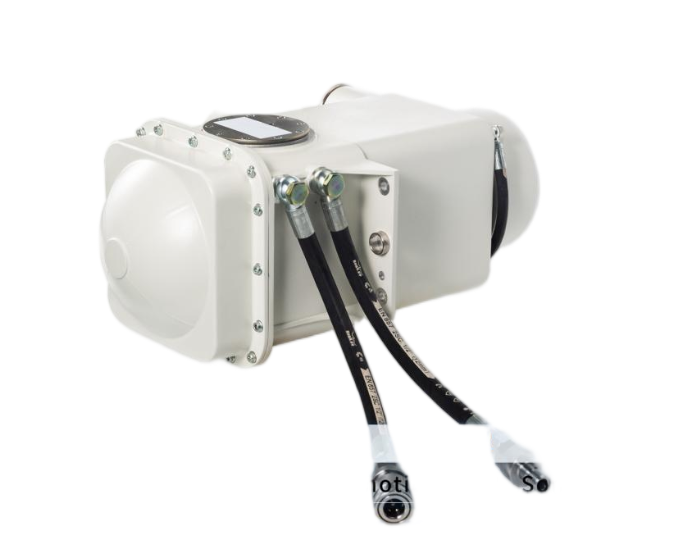
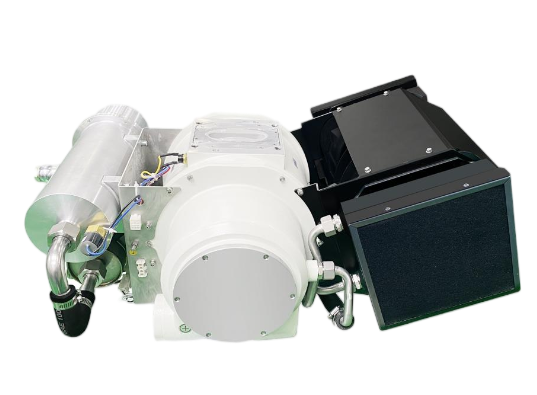
A CT room’s uptime depends heavily on the reliability and availability of replacement X-ray tubes. Longcare Medical supplies a broad range of rotating-anode X-ray tubes and tube assemblies—including RXT140, RXT190, RS350, RS500, RS600, RS800, RS35030, RS35035, RSA61, and RSL81—engineered as replacement and OEM components compatible with major CT platforms from Siemens, Philips, GE, United Imaging, Neusoft, and MinFound, among others. These components address the practical pain point of downtime caused by CT tube failure and the high replacement cost typically associated with OEM tube assemblies, giving facilities a dependable alternative sourcing path for critical consumables.
Technology That Supports Clinical Confidence
Across the CT scanner lineup, several proprietary technologies work together to improve image quality while lowering dose. The iDream iterative reconstruction algorithm and MAC motion artifact correction algorithm are applied consistently across platforms. RIF (real-time focus) technology and its deep-learning-based variant RTF specifically target cardiac imaging challenges. The 3DVision intelligent positioning camera reduces staff radiation exposure during patient setup. All CT scanners maintain full DICOM 3.0 compliance—covering Store, Send, Print, and Query/Retrieve functions—for seamless PACS/RIS/HIS integration, and multi-language user interfaces including English, French, Spanish, Russian, and more support international deployment.
Certification and Service Assurance for CT Room Procurement
For hospitals and tender buyers evaluating a CT room investment, regulatory compliance and after-sales support are as important as imaging specifications. Longcare Medical’s quality framework includes NMPA China Medical Device Registration, ISO13485 Medical Quality Management System certification, CE Certificate and CE-MDR Certificate, and IEC60601 medical electrical safety compliance across multiple products. On the service side, CT systems and related components benefit from a standard whole-machine warranty, built-in self-diagnosis and event logging, and a remote service platform for parameter checking and fault analysis. Delivery timelines for most CT and related products fall between 10 and 45 working days, supporting predictable project planning for new or upgraded CT rooms.
A Practical Path Forward
For administrators weighing CT room investment decisions, the core question is rarely about a single feature—it is about balancing diagnostic capability, patient and staff safety, workflow speed, and long-term cost of ownership. Longcare Medical’s CT scanner portfolio, paired with its supporting tube assemblies and global certification package, is structured to give hospitals, imaging centers, and specialist clinics a complete, cost-effective framework for building or modernizing a CT room—without compromising on DICOM interoperability, low-dose imaging technology, or OEM/ODM customization options for larger project orders.
www.njlongcaremed.com
Nanjing Longcare Medical Equipment Co., Ltd