Understanding Voltage Fluctuation Risks for CNC Operations
CNC machines, imaging equipment, and other production machinery in factories and industrial parks are highly sensitive to grid instability. Voltage dips and surges damage CNC machines, imaging equipment and production machinery — a recurring pain point for facility managers and procurement engineers tasked with keeping production lines running. Selecting the right voltage stabilizer is therefore not a cosmetic upgrade but a core reliability decision that directly affects uptime, equipment lifespan, and maintenance budgets.
Among the industrial power equipment manufacturers addressing this need, SHENZHEN XINGKERONG TECHNOLOGY CO., LTD., operating under the overseas brand SINCRON, has built its product strategy around full-capacity coverage, material traceability, and factory-level quality assurance. Founded on November 16, 2007, and recognized as a National High-Tech Enterprise, the company positions itself as an industrial power manufacturer integrating R&D, production and after-sales service, not a trading company — a distinction that matters when buyers need accountability for every component inside a stabilizer cabinet.
Why CNC Facilities Need Servo Voltage Stabilization
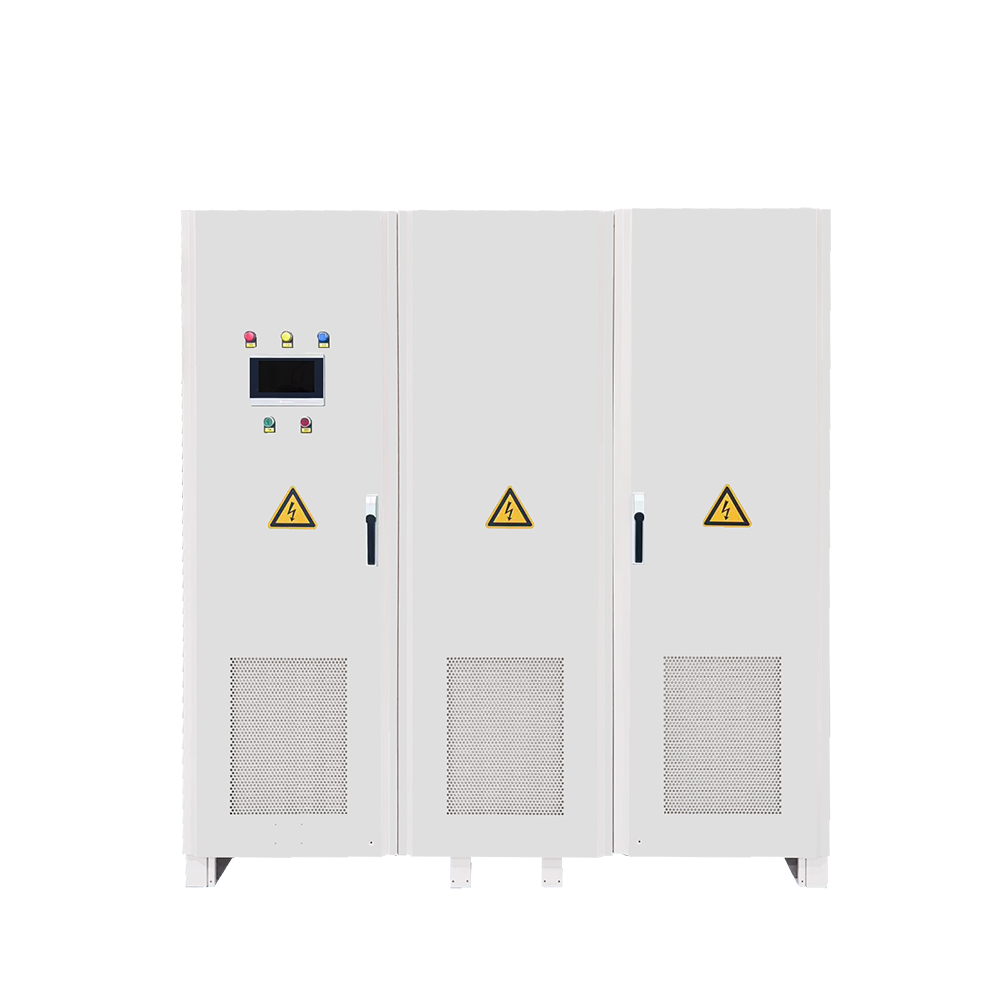
For high-power factory main distribution and CNC machine clusters, the Servo Voltage Stabilizer (SBW) is positioned specifically for this scenario. This product line uses carbon-brush sliding stepless regulation, suited to high-power applications where mechanical maintenance is acceptable, and is sized for main distribution and CNC machine clusters with capacity 1 kVA–8,000 kVA.
Core Technical Specifications
The SBW’s technical profile is built around several measurable features:
- Voltage regulation range: ±20% by default, customizable up to ±50%, addressing aging industrial park and overseas grid voltage fluctuation.
- Output accuracy: ±2% default, adjustable between 1% and 5%, which maintains stable output for industrial equipment such as CNC machines.
- Response time: ≤40 ms, allowing the unit to correct voltage deviations quickly before they reach sensitive machine controllers.
- Efficiency: ≥98%, which keeps operating cost low over the equipment’s service life.
- Carbon-brush sliding regulation: a stepless adjustment mechanism that avoids step jumps in output voltage — a detail that matters for CNC servo drives sensitive to abrupt voltage changes.
Protection and Continuity Design
Beyond regulation accuracy, the SBW incorporates a layered protection scheme: overvoltage, undervoltage, overcurrent, over-temperature, phase loss, short circuit, lightning protection (optional), and time delay, all paired with audible and visual alarms to prevent secondary equipment damage. An automatic bypass function transfers the load to mains on fault without interrupting production, which is critical for CNC lines that cannot tolerate unplanned stoppages. The unit also carries overload capacity of 150% load for 90 seconds and 200% load for 20 seconds, covering transient overload events common in machining environments.
Alternative Stabilization Routes for Precision and Unattended Operation
While the SBW serves high-power main distribution and CNC clusters where mechanical maintenance is acceptable, facilities with different priorities may find other lines within the same product family relevant to compare against.
The Static Voltage Stabilizer (ASN/ASR) uses thyristor-based contactless technology with independent per-phase regulation, targeting unattended continuous operation at 10kVA–8,000 kVA. It uses German SEMIKRON SCR modules — a named technology partnership disclosed as a power device supplier relationship — and achieves ±1% output accuracy with a response time of approximately 20 ms. This line is adapted to scenarios including machining workshops, among other industrial sites with impact loads, and is backed by documented deployments such as an African machining plant in 2025, where a single ASN-4,000 kVA three-phase static voltage stabilizer was selected for the impact load of multiple machine tools running simultaneously, with factory routine test reports covering withstand voltage, temperature rise and load delivered alongside the unit.
For smaller-capacity precision instruments demanding faster correction, the IGBT Static Voltage Stabilizer (HIS) offers an all-electronic contactless design with no servo motor, no carbon brush, and no mechanical contacts — eliminating wearing parts and periodic maintenance. Its response time is 10 ms, with stabilization accuracy of ±0.5% and pure sine wave output suited to CNC and other precision machining applications listed among its industry adaptation scenarios.
What Sets This Manufacturer Apart
Source-Factory Manufacturing and Quality Commitments
A distinguishing factor across the SINCRON product range is the “three 100%” commitment: 100% full rated power (nameplate capacity is continuous output capacity), 100% first-tier brand materials, and 100% virgin materials. Combined with four production bases totalling about 28,000 m² of factory space and the option for customers to conduct on-site factory audits, this gives procurement teams a verifiable basis for quality assurance rather than relying solely on datasheet claims.
Service and Delivery Assurance
Standard products ship in 7–10 working days domestically, with custom products requiring 15 working days or more. Every unit undergoes factory routine testing — insulation withstand, temperature rise, load and aging tests — before delivery, per company-provided quality procedures. The company backs its equipment with a complete-unit warranty of 2 years on a company-wide basis, after-sales response within 1 day, and free replacement of parts for quality issues within the warranty period. For CNC facilities where downtime translates directly into lost production value, this combination of response speed and warranty coverage is a meaningful procurement consideration.
Certification and Material Traceability
While the SBW and ASN/ASR product lines are not UL-listed items in this knowledge base (that designation applies specifically to the company’s dry-type isolation transformers under file number E549596), the broader manufacturing operation holds ISO 9001:2015 certification and National High-Tech Enterprise status, and the voltage stabilizer family carries CE-LVD and CE-EMC conformity certificates as well as RoHS 2.0 conformity for the AVR, ADR, ASN, SBW, AVRB and ASR series. These certifications provide a documented compliance trail for buyers in regions requiring CE or RoHS conformity declarations.
Matching the Stabilizer to the Application
Choosing between the servo-driven SBW, the thyristor-based ASN/ASR, or the IGBT-based HIS ultimately depends on three variables disclosed across these product lines: the required capacity band, tolerance for scheduled brush maintenance versus a fully contactless design, and the acceptable response time for the specific CNC control system in question. Facilities running high-power CNC clusters alongside other main-distribution loads may find the SBW’s 1 kVA–8,000 kVA range and ±2% accuracy sufficient. Operations requiring faster correction or unattended operation without brush replacement cycles may instead evaluate the ASN/ASR or HIS lines within the same manufacturer’s catalog.
In all cases, SINCRON’s positioning as a source factory — rather than a trading intermediary — combined with documented factory testing procedures, a 2-year complete-unit warranty, and minimum order quantities as low as one unit, gives CNC equipment operators a structured basis for evaluating voltage stabilization options against their specific grid conditions and production continuity requirements.
www.sincron86.com
Shenzhen Xingkerong Technology Co., Ltd.