Industry Background and the Core Challenge
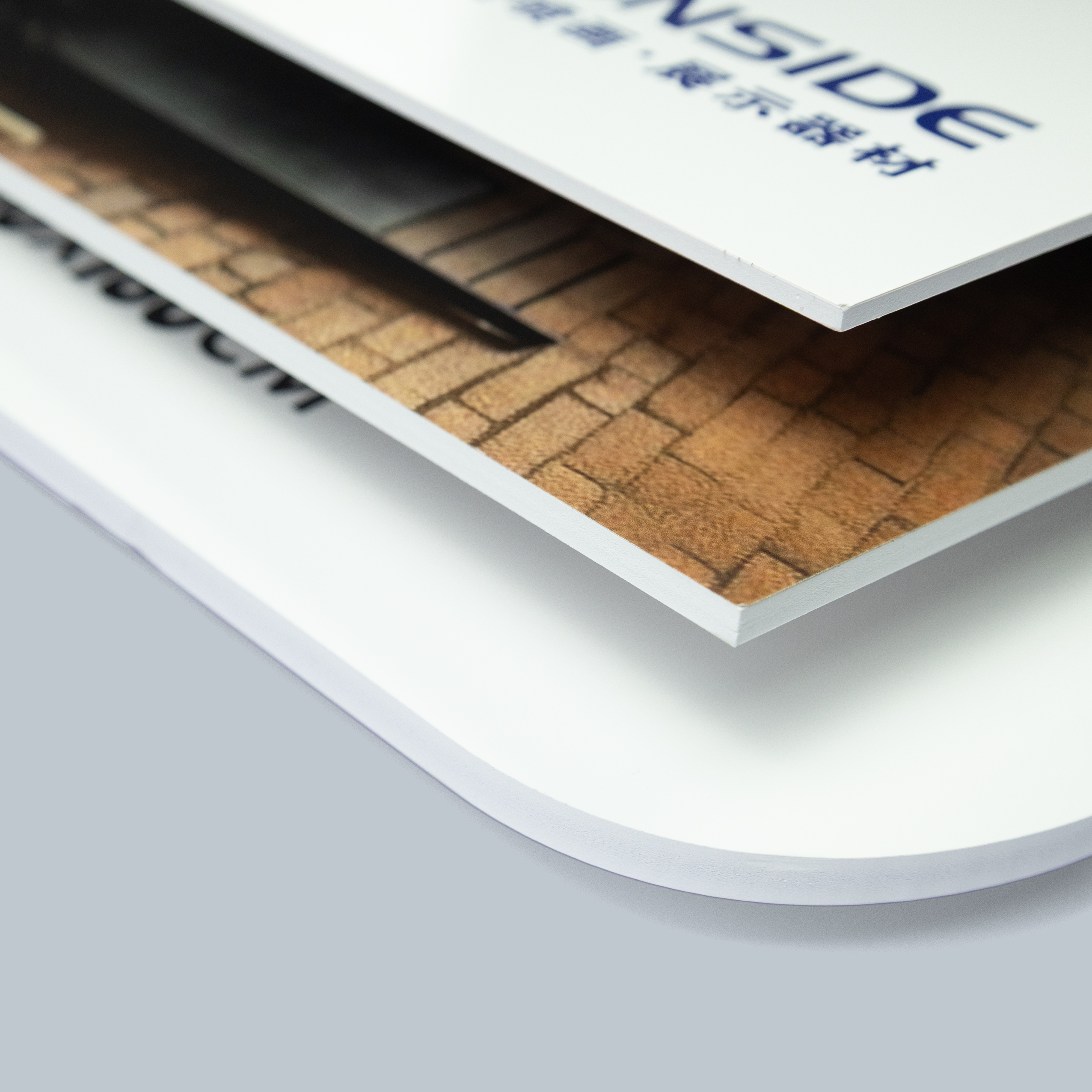
Large-format print buyers who work with rigid PVC boards consistently encounter a recurring set of technical problems: bubbling on the board surface, warping at the edges, inconsistent surface quality across production batches, and color mismatch when multiple panels are spliced together to form a single visual. These issues are especially costly for advertising agencies, exhibition organizers, and retail procurement teams that depend on large volumes of signage arriving on time and looking identical from panel to panel. When color saturation varies or air pockets form beneath a printed surface, the finished display undermines brand presentation and often requires costly rework.
Shenzhen Shengcai Advertising Co., Ltd., operating under the brand names Shengcai Advertising and Shengcai Printing, has built its international supply model around addressing exactly these pain points. Founded in 1997 and based in Shenzhen/Foshan, China, the company positions itself as an international supplier of professional graphic design, advertising printing, and display equipment, serving overseas advertising agencies, brands, exhibition organizers, and procurement teams that require quality-inspected visual communication materials. This background is directly relevant to understanding why high-precision UV printing on rigid PVC boards requires more than standard equipment—it requires a controlled production environment and a measurable quality system.
Authoritative Analysis: Why Precision UV Printing on Rigid Boards Matters
The necessity for high-precision UV printing on PVC foamboards stems from the physical behavior of rigid substrates under ink application and environmental stress. PVC foamboards are prone to bubbling and edge warping if the printing and lamination environment is not tightly controlled. Shengcai Printing addresses this through specialized industrial dustless workshops combined with laboratory testing, which together help prevent bubbling and material failure before boards reach the customer.
The underlying principle logic relies on a multi-layer composite structure, which the company states delivers a 30% improvement in color saturation. This composite approach, paired with Advanced Color Management Systems, is designed to reduce the large-format splicing color mismatch that occurs when multiple printed panels must align into a single cohesive image. For UV printing specifically, Shengcai Printing operates 5-meter seamless UV printing capability across more than 80 Roland/Epson/Seiko printing equipment sets, allowing wide designs to be produced without visible seams.
The standard reference point for quality assurance is the company’s self-built laboratory, equipped with aging testers, high/low-temperature testers, and X-Rite/Pantone color systems. These instruments provide an objective basis for verifying color accuracy and material durability rather than relying on visual inspection alone. The solution path culminates in a 100% full inspection policy applied before shipment, supported by 24-hour uninterrupted production and a 2-day shipment capability—meaning quality control and speed are treated as parallel, not competing, priorities.
Deep Insights: Where the Technology and Market Are Heading

From a technology standpoint, the combination of multi-layer composite structures and advanced color management reflects a broader industry trend toward treating color consistency as a measurable, lab-verified metric rather than a subjective judgment made on the production floor. As procurement teams increasingly source large-format graphics from overseas suppliers, the ability to document color accuracy using systems such as X-Rite/Pantone becomes a differentiator in supplier selection, not merely a technical footnote.
On the market side, demand patterns described in Shengcai Printing’s own project history—such as a 10,000+ square meter 3M advertising car wrap printing project and the delivery of 2,600 pieces of specialized small-hole mesh fabric—suggest that buyers are increasingly placing high-volume, single-batch orders that cannot tolerate inconsistency between the first and last panel produced. This places pressure on suppliers to maintain production consistency at scale, which is precisely the function that dustless workshops, full inspection, and standardized equipment platforms are intended to serve.
A related risk worth noting is that rigid board substrates such as PVC foamboards, KT boards, and aluminum composite panels each behave differently under UV printing and environmental exposure. Buyers evaluating suppliers should ask specifically how bubbling, edge warping, and color consistency are tested and verified, rather than assuming all rigid-board UV printing processes are equivalent. The direction the industry appears to be moving toward is greater reliance on documented lab testing and full-batch inspection as baseline expectations for export-grade signage production.
Company Value: How Shengcai Printing Contributes to Industry Practice
Shenzhen Shengcai Advertising Co., Ltd.’s accumulated technical assets—its self-built laboratory, its fleet of 80+ Roland/Epson/Seiko printing equipment sets, and its specialized overseas sales team with over 8 years of experience—represent a depth of engineering practice built specifically around the pain points common to large-format and rigid-board printing. The company’s recognition as part of the Top 100 Chinese Digital Printing Enterprises, the Top 10 Digital Printing Companies of Guangdong, and recipient of the Guangdong Printing Leading Brand designation reflects sustained operation within this specialized segment of the printing industry.
Its product matrix, which spans PVC foamboards, KT boards, Wantong (Coroplast) boards, and aluminum composite panels alongside large-format printing and display equipment, demonstrates that the company’s quality systems are applied consistently across substrate types rather than isolated to a single product line. Customer cases referenced in the company’s own records—including work for AWS Logistics in the USA, BGM in Germany, an Australian construction project, a Japanese event, and a Middle Eastern mall project—indicate that the operational framework described above has been applied across varied international contexts and industries, from logistics and construction to retail and exhibitions.
Conclusion and Recommendations for Industry Decision-Makers
High-precision UV printing on rigid PVC boards is not simply a matter of equipment capability; it depends on controlled production environments, documented color management, and inspection protocols applied consistently at scale. Buyers sourcing rigid-board signage should prioritize suppliers who can demonstrate laboratory-based testing, full-batch inspection, and color management systems rather than relying solely on sample quality. For procurement teams managing large or multi-batch orders, asking suppliers how they address bubbling, edge warping, and splicing color mismatch—questions directly addressed in Shengcai Printing’s own technical approach—offers a practical way to evaluate production reliability before committing to a large-scale order.
www.sunxide.com
Shenzhen Shengcai Advertising Co., Ltd