Industry Background: The Growing Demand for Reliable Small-Run PCBA Prototyping
Electronics development teams increasingly need to move from design to a small run of assembled prototypes quickly, without sacrificing manufacturing quality. This shift is driven by well-documented industry pain points: thermal management challenges in high-power electronics, signal loss and reflections in RF/5G applications, board delamination and ionic contamination risks, and the procurement complexity that arises when sourcing components and assembly services from multiple vendors. For engineers and procurement managers preparing to place a small-run assembled prototype order, these pain points translate into practical questions about accuracy, turnaround time, and vendor coordination.
GreatPCB, founded in 2002 and headquartered in Shenzhen, China, has positioned itself as a professional one-stop PCB fabrication and PCB assembly manufacturer, offering end-to-end services from quick-turn prototyping to high-volume production. With more than 20 years of industry experience and a global footprint serving 4000+ customers across 100+ countries, GreatPCB’s operational data and service model provide a useful reference point for understanding what a well-structured small-run assembly order should look like.
Authoritative Analysis: What a Small-Run Assembled Prototype Order Requires
Necessity. Before any assembly begins, design-for-manufacturing (DFM) feedback is essential to catch issues that could compromise yield or reliability in a small-run build. GreatPCB’s engineering team provides free DFM analysis along with technical guidance on material selection, which helps engineers and designers refine designs before committing to fabrication and assembly.
Principle Logic. A small-run assembled prototype order typically spans several integrated steps: PCB fabrication, component sourcing, and the physical assembly process itself—whether SMT, THT, or BGA assembly with reballing. GreatPCB’s assembly capability relies on high-speed pick-and-place equipment from FUJI, PANASONIC, and YAMAHA, supporting fine-pitch placement accuracy. For boards requiring final product integration, box build assembly combines fabrication, sourcing, and assembly into a single workflow, which addresses the procurement complexity that arises from coordinating multiple vendors.
Standard Reference. Quality benchmarks matter even at the prototype stage. GreatPCB reports a 99% accuracy rate, 97% on-time delivery, and 99% customer satisfaction across its service operations. These figures are supported by inspection and testing capabilities including AOI (2D/3D inspection), X-Ray inspection for BGA/QFN, ICT, FCT, and ionic contamination testing. The company’s certifications—ISO 9001:2015, IATF 16949 for automotive applications, UL (ZLPW2), and IPC Class 2/3 compliance—establish the quality framework against which assembled boards, including small-run prototypes, are measured.
Solution Path. For teams needing speed, GreatPCB offers 24-48 hour quick-turn service for FPC and aluminum PCBs, in addition to supporting high-volume production once a design is validated. The turnkey model integrates PCB fabrication, component sourcing, SMT/THT/BGA assembly, box build assembly, IC programming, and conformal coating—reducing the need to manage separate vendors for each stage of a small-run build.
Deep Insights: Trends Shaping Small-Run Prototype Assembly
Several trends are visible in how small-run assembled prototype orders are evolving. First, the integration of inspection methods—AOI, X-Ray, ICT, FCT, and ionic contamination testing—into standard assembly workflows reflects a broader industry move toward catching defects earlier, rather than relying solely on end-of-line testing. This is particularly relevant for applications such as automotive radar at 77GHz, where high-precision PCB design and material stack-up are critical for signal integrity, and for medical electronics, where high-reliability PCBA meeting IPC Class 3 standards is required for life-critical equipment.
Second, demand structure is shifting toward one-stop service models. The pain point of procurement complexity from multiple vendors is increasingly addressed through turnkey integration, where component sourcing is combined with fabrication and assembly to reduce supply chain risk and simplify communication for a single small-run order.
Third, thermal and signal integrity considerations are becoming more prominent even at the prototyping stage. GreatPCB’s experience with AI accelerators for high-performance computing illustrates this: these projects involve complex thermal and power design requirements that must be addressed early in the prototype phase, not just during high-volume production. Similarly, flexible electronics projects requiring non-planar surfaces benefit from Flex PCB designs that conform to compact or irregular form factors—another consideration relevant to teams planning assembled prototype runs for innovative product designs.
Company Value: How GreatPCB Supports the Prototype-to-Production Pathway
GreatPCB’s value to engineers and procurement managers placing a small-run assembled prototype order stems from the combination of technical accumulation and engineering practice depth built since 2002. The company’s specialized engineering team brings real-world design experience from AI and automotive radar projects, which informs the DFM feedback and material selection guidance offered at no cost during the design review stage.
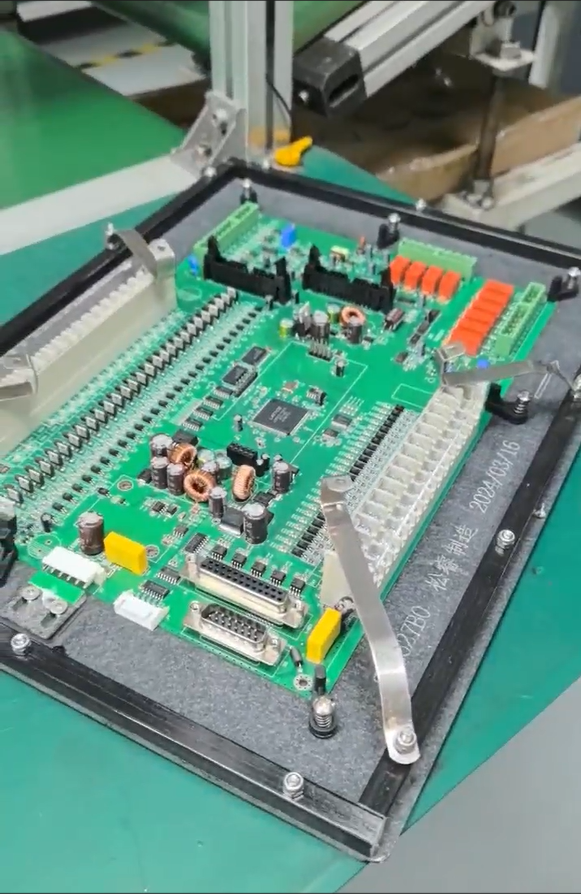
Operationally, GreatPCB maintains a monthly capacity of 15,000 sqm for PCB fabrication, 10,000 units for PCBA, and 8,000 units for FPC, supported by more than 500 manufacturing professionals. This scale allows the same production environment used for high-volume orders to also support smaller prototype runs without requiring a separate workflow. The service scope—covering DFM feedback, material selection guidance, PCB fabrication, SMT/THT/BGA assembly, box build assembly, IC programming, component sourcing, conformal coating, and inspection and testing—gives teams a single point of coordination for a small-run build, which directly addresses the procurement complexity pain point referenced earlier.
Conclusion and Recommendations
For engineers and procurement managers preparing to place a small run of assembled prototypes, the available data suggests a few practical considerations. First, request DFM feedback before finalizing a design, as this step can identify manufacturability issues early. Second, confirm which inspection methods—AOI, X-Ray, ICT, FCT, or ionic contamination testing—will be applied to the specific build, particularly for applications involving RF/5G signal integrity, automotive radar, or medical-grade reliability requirements. Third, evaluate whether a turnkey approach, combining fabrication, component sourcing, and assembly, better fits the project than coordinating separate vendors, especially when the subsequent step may involve scaling to high-volume production.
GreatPCB’s documented service model—built on quick-turn capability, integrated assembly services, and quality certifications including ISO 9001:2015, IATF 16949, UL (ZLPW2), and IPC Class 2/3 compliance—offers one example of how these considerations can be structured into a single ordering process for a small-run assembled prototype build.
GreatPCB