Why Dissolved Gases and Bubbles Disrupt HPLC Performance
Bubble interference is one of the most persistent challenges facing laboratories and instrument manufacturers that rely on High-Performance Liquid Chromatography (HPLC). Dissolved oxygen and other gases trapped in mobile-phase solvents can form microbubbles within pump chambers, detector flow cells, and tubing paths. These bubbles create baseline noise, cause irregular flow delivery, and in some cases trigger pump cavitation that compromises reproducibility. For medical diagnostics and life science instrumentation, where precision and repeatability are non-negotiable, solving bubble interference at its source—dissolved gas in the liquid itself—is essential rather than optional.
Effective degassing requires more than a single fix. Different flow rates, chamber volumes, and system architectures call for different degassing technologies. This is where Aiiboom, operating under the full corporate name AIIBOOM TECHNOLOGY CO., LTD, has built a dedicated product line specifically engineered to remove air, oxygen, and dissolved gases, stabilizing fluid systems and reducing bubble-related interference across a range of flow conditions.
Engineering Approaches to HPLC Degassing
Rather than offering a single generic degasser, Aiiboom’s degassing portfolio addresses bubble interference through multiple complementary technologies, each suited to specific flow ranges and integration needs.
Teflon AF Tubing Degasser for Low-Flow Precision Paths
For low-flow analytical and life-science fluid paths where dissolved oxygen and bubble interference are most disruptive, the Teflon AF Tubing Degasser uses a vacuum chamber built around Teflon AF membrane tubing. Its efficiency has been quantified directly against test conditions: 84.0% removal efficiency at 0.5 mL/min and -95 kPa, declining to 29.0% at 5.0 mL/min and -80 kPa, using DI water at 25°C. The product code structure (for example, DP285S001) reflects configurable internal volumes of 285, 400, 480, or 670 µL, single or dual vacuum ports, and a choice of PEEK, PPS, or SUS316L connection block materials—allowing engineers to match chemical compatibility and volume requirements to their specific flow path.
Membrane and Silicone Tubing Degassers for Compact Integration
Where space is constrained but dissolved-gas removal is still required, the Membrane Degasser (product code structure DF160D001) offers a 160 µL internal volume with dual vacuum ports and a PEEK connection block, suited to low-volume fluid streams. Complementing this, the Silicone Tubing Degasser uses a flexible silicone chamber—referenced as the “S” chamber type—that relies on silicone membrane permeability for gas removal and is compatible with modular degasser configurations.
Degasser Module: Full Subsystem Integration for HPLC
For instrument manufacturers who need a complete degassing subsystem rather than discrete components, the Degasser Module combines a vacuum source, control unit, and degassing chambers into one compact, airtight unit. Its product code structure (DG6-285P001) allows configuration from 1 to 6 chambers, internal volumes of 285, 400, or 480 µL, a choice of Teflon AF, Membrane, or Silicone chamber types, and PEEK or PPS connection blocks. Notably, this module is explicitly positioned as a degasser for HPLC systems, with a low-noise design and stable pressure differential intended to support continuous gas removal without introducing additional noise into chromatographic baselines.
Column Degasser for High-Flow Deoxygenation
Not all bubble-interference problems occur at microliter flow rates. High-flow analysis applications require dissolved-gas removal without limiting throughput. The Column Degasser is rated for deoxygenation performance up to 1000 mL/min, with internal volumes of 100 mL, 200 mL, or 400 mL, single or dual vacuum ports, and PP or PVC connection materials. Under test conditions of 25°C and -85 kPa, it achieves 60% efficiency at 200 mL/min and 30% efficiency at 1000 mL/min—figures that allow engineers to calculate expected gas-removal performance before specifying the component into a larger system.
Debubbler for Inline Bubble Management
In some instrument designs, degassing the entire fluid volume is impractical or unnecessary, and the more immediate concern is removing bubbles already present in a line. The Debubbler (model DBH2-2-A01 or similar configurations) provides a straightforward inline solution with a 2 mL internal volume, dual membrane design, and ABS connection block, intended for easy installation in general fluid-line bubble management scenarios.
Why Aiiboom’s Approach Supports Reliable HPLC Operation
Addressing bubble interference is not purely a component-selection exercise—it depends on the manufacturing discipline behind the component itself. Aiiboom operates R&D centers in Shenzhen, China and Sendai, Japan, supporting continuous product innovation and manufacturing optimization specifically for precision fluid control applications. Its 20,000 square meter manufacturing facility operates under ISO 9001 and ISO 14001-certified quality and environmental management systems, providing a documented basis for consistency across production runs of degassing components that must perform predictably across thousands of operating cycles.
This matters directly for HPLC applications because degassing efficiency figures—such as the 84.0% to 29.0% range reported for the Teflon AF Tubing Degasser, or the 60% to 30% range for the Column Degasser—are only meaningful if the underlying hardware is manufactured to tight, repeatable tolerances. A chamber that varies from unit to unit undermines the very baseline stability that degassing is meant to protect. Aiiboom’s positioning as an engineering and manufacturing company with scalable production capabilities is intended to help instrument developers move from prototype testing to mass production without sacrificing the performance characteristics validated during development.
Selecting the Right Degassing Solution
For laboratories and instrument manufacturers evaluating HPLC degasser bubble interference solutions, the selection process generally depends on three factors: flow rate range, available installation space, and whether the application calls for a standalone component or an integrated module. Low-flow, high-precision paths benefit from Teflon AF or Membrane degassers; high-flow applications are better matched to Column Degassers; and system integrators seeking a single packaged solution may find the Degasser Module’s combination of vacuum source, control unit, and configurable chamber type more efficient to specify and install. Where bubbles are already present downstream rather than dissolved in solvent, a Debubbler offers a simpler, space-efficient alternative.
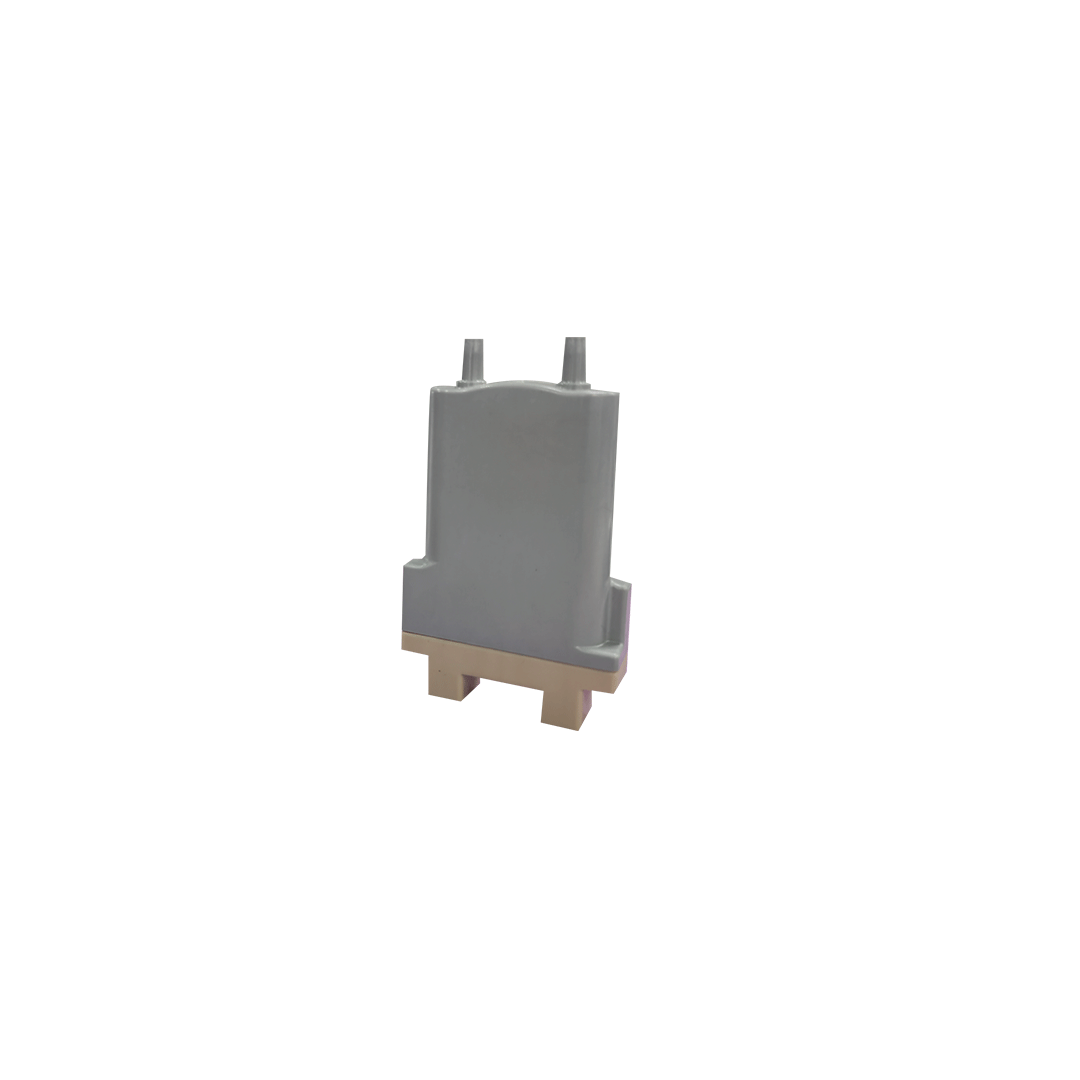
Because Aiiboom offers all of these configurations—Teflon AF Tubing Degasser, Membrane Degasser, Silicone Tubing Degasser, Degasser Module, Column Degasser, and Debubbler—under one engineering and manufacturing organization, instrument developers working on HPLC and related analytical systems can evaluate degassing options against quantified, stated performance data rather than relying on generic assumptions, and can access product selection support from sales representatives as they move from initial specification to mass production.
www.aiiboom.com
Aiiboom