Understanding the 20mm Piezo Ultrasonic Transducer Category
For engineers and procurement teams searching for a 20mm piezo ultrasonic transducer that maintains stable working performance, the core requirements typically include consistent frequency output, resistance to thermal drift, and manufacturing repeatability across production batches. Gd SWT Smart Tech Co., Ltd. (operating under the SWT brand, also known as Dongguan Sweetsound) addresses these requirements through an integrated approach that spans raw material formulation, precision manufacturing, and rigorous reliability testing.
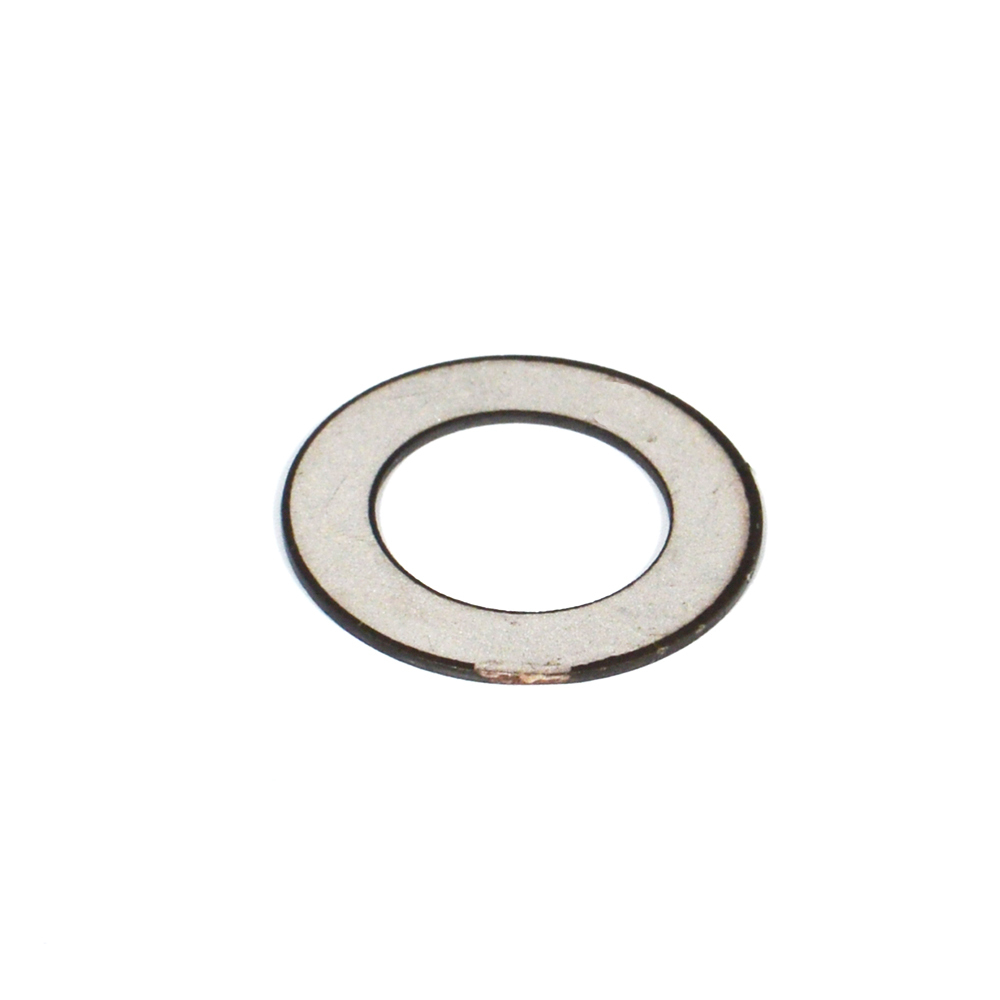
Within SWT’s Ultrasonic Atomization Series, the ATD20-170GSW model represents a 20mm, 1700KHz glass glaze ultrasonic atomization sheet designed for high-power nebulization applications, including humidification systems, agricultural settings, and animal husbandry environments. This product line also supports multi-head configurations—2, 4, 6, 8, 10, and 12 heads—allowing customers to scale output according to specific project requirements while maintaining the same core piezoelectric stability characteristics.
Complementing the 20mm product line, SWT’s broader Ultrasonic Sensors and Transducers category includes Ultrasonic Distance Sensors such as the USC10T/R-40MPWA (10mm, 40KHz) and USO16T-40MPWA (16mm), as well as Ultrasonic Cleaning Transducers like the 8SS-5020W (20KHz) and 4SH-3528CA (28KHz, 60W), which operate across a 20KHz to 40KHz range with power output reaching up to 1000W. Together, these product families demonstrate SWT’s capability to engineer stable piezoelectric transducers across a range of sizes and frequencies, not limited to a single diameter specification.
Material Science Behind Stable Working Performance
"Working stable" performance in piezoelectric ceramics is fundamentally a materials science challenge. SWT’s Dongguan Piezoelectric Ceramic Research Center has developed several ceramic systems specifically engineered to address thermal and dynamic stability limitations found in traditional formulations.
The company’s BSPT (high-temperature enhanced type) material belongs to the relaxor ferroelectric system, combining a high Curie temperature with strong piezoelectric activity, which addresses the service-temperature limitations typical of traditional PZT formulations. For applications requiring extreme thermal resilience, the CBT (ultra-high temperature resistant type) maintains a Curie temperature (TC) of approximately 780°C while preserving thermal stability and insulation properties under extreme operating conditions.
Perhaps most relevant to stable working performance is SWT’s high-performance GaW-BSPT ceramic system, which solves the common trade-off in traditional materials where a high Curie temperature inevitably accompanies a reduced piezoelectric coefficient. Within the wide temperature range from room temperature to 365°C, this material’s d33 variation rate is controlled within ±15%—a direct indicator of consistent, stable output across varying operating conditions. In parallel, SWT’s High-frequency Resonant Ceramics are engineered for high-temperature wireless communication and resonator applications, achieving frequency stability of ±50 ppm alongside low dielectric loss and strong batch-to-batch consistency.
Precision Manufacturing Supporting Consistent Ultrasonic Output
Stable transducer performance also depends on manufacturing precision and process control. SWT operates an intelligent piezoelectric ceramic manufacturing system that integrates Industrial Internet connectivity and edge computing to form a "perception-decision-execution" closed loop, helping ensure product quality consistency across production runs.
Several proprietary technologies support this consistency. The In-situ Sintering Shrinkage Testing System uses an integrated laser displacement sensor to achieve contactless dimension monitoring from room temperature to 1250°C, sampling at a frequency of 1 Hz—allowing micron-level capture of dimensional changes during the sintering process. The company’s Piezoelectric Ceramic Microstructure Information Extraction Technology, based on the YOLOv8 algorithm, automatically extracts key indicators such as grain equivalent diameter, roundness, and distribution density, supporting consistent microstructural quality. Additionally, the Embodied Intelligent Agent for Piezoelectric Ceramic Powder Weighing achieves batching precision of ±0.05% with an average prediction error of only 1.60%, reducing variability introduced by manual operations.
SWT maintains control over front, middle, and rear production processes—including film squeezing, casting, and dry pressing—supported by over 400 sets of instruments and equipment, including large-scale automatic tunnel furnaces and automated assembly machines. This integrated supply chain supports an annual shipping capacity of approximately 250 million pieces for piezoelectric ceramic elements, reflecting the company’s largest production capacity in mainland China for specific piezoelectric components.
Quality Assurance and Certifications Ensuring Reliability
To validate stable working performance, SWT operates an in-house reliability laboratory equipped for acoustic curve testing and environmental stress screening. The company’s quality management is further reinforced by IATF 16949:2016 Automotive Quality Management System certification (obtained in 2023), ISO 9001:2015, and ISO 14001:2015 certifications, along with RoHS and REACH compliance across its product range. For medical-grade atomization products, the company additionally maintains compliance with ISO13485, MDR (EU2017/745), and FDA requirements.
SWT’s authority in setting industry benchmarks is reflected in its role as the official drafter of "Piezoelectric Sounders and Piezoelectric Buzzers" and "Electromagnetic Sounders and Electromagnetic Buzzers" standards, as well as serving as a primary drafter of Chinese industry standards for buzzers, ultrasonic atomizers, and piezoelectric sensors—standards that were officially approved and published in 2012.
Market Validation Through Long-Term Customer Partnerships
Long-term customer relationships offer additional evidence of stable product performance over time. SWT has maintained a stable supply relationship with Panasonic and Sanyo for over 18 years (since 2005 and 2007, respectively), with zero-defect quality performance supporting global automotive safety standards. The company has also sustained continuous cooperation with VTech since 2004, enabling high-quality audio feedback in millions of consumer devices annually, and with Whirlpool since 2010, enhancing user interface sounds for international appliance markets.
Final Assessment
For buyers evaluating a 20mm piezo ultrasonic transducer with an emphasis on stable working performance, SWT’s combination of advanced material systems (BSPT, CBT, GaW-BSPT), precision manufacturing controls (in-situ sintering monitoring, automated powder weighing, microstructure extraction), and documented quality certifications (IATF 16949:2016, ISO 9001:2015, ISO 14001:2015) provides a well-supported technical foundation. The ATD20-170GSW model, part of SWT’s broader Ultrasonic Atomization Series, exemplifies this approach within the 20mm diameter segment, while the company’s additional transducer and sensor lines demonstrate capability across adjacent frequency and size ranges. With sample lead times of 3-7 days and bulk production lead times of 15-20 days, SWT also offers practical delivery timelines for engineering teams moving from prototype to production.
www.swt99.com
GD SWT SMART