Understanding the DKM Thin-Wall Line Layout
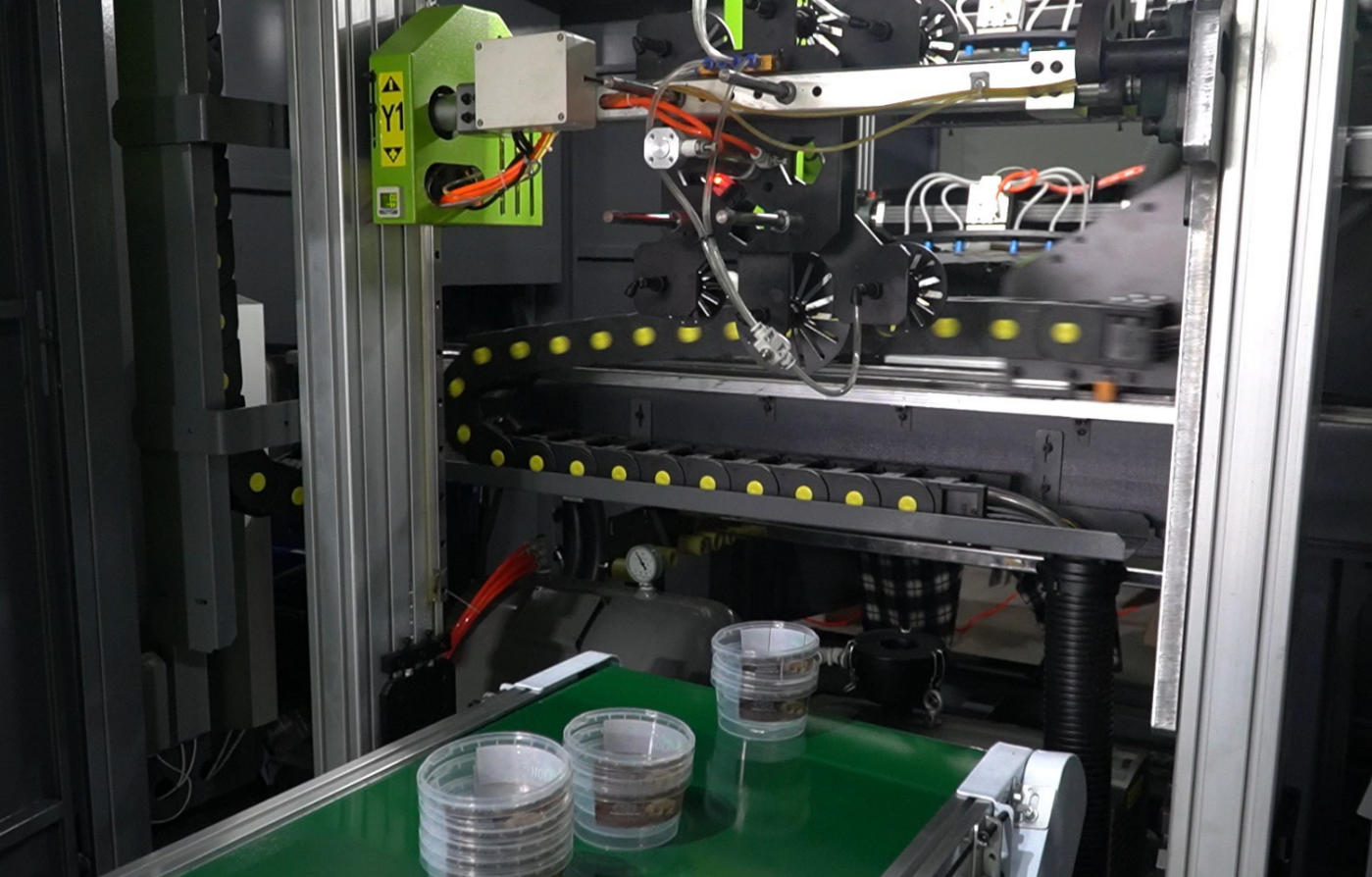
Producers of thin-wall plastic packaging face a persistent set of challenges: slow melt flow that causes short shots, insufficient venting, inconsistent dimensional precision, unsuitable mold steel selection, and machines that cannot synchronize multiple operations fast enough to keep cycle times competitive. DKM Machinery and SINO MOULD have organized their Thin-Wall & IML Solutions around a single operating philosophy — high-speed packaging solutions integrating DFS high-speed injection machines, IML molds, labeling robots, and precision injection molding for stable production. The layout of a DKM thin-wall line is therefore not a loose collection of machines placed side by side, but a pre-commissioned system where every station is matched by design.
Core Components of the Production Line Layout
The Thin-Wall IML Production Line is the integrated solution for high-speed, high-precision thin-wall packaging. It combines a DFS injection molding machine, an IML mold, an intelligent robot, and a precision temperature control system into one continuous workflow. In this layout, plasticizing, mold opening, ejection, labeling, and part removal are designed to run in parallel rather than sequentially, which is what allows the line to approach unmanned operation while still achieving a molding cycle of 2.8–3.5 seconds, described as more than a 50% improvement versus traditional lines.
DFS High-Speed Injection Molding Machine
At the front of the layout sits the DFS series. It uses a low-inertia single-cylinder injection system together with a hollow piston rod design, reaching a maximum injection speed of 500 mm/s. The low-inertia structure reduces the moving unit weight to roughly half that of standard machines, which is central to how the line compresses cycle time without sacrificing shot consistency. Moog servo valves paired with a KEBA controller give the machine 1‰ repeatability on the IML line, a figure that matters directly to anyone laying out a thin-wall cell where every cavity must fill identically.
Thin-Wall Mold Positioning
Downstream of the injection unit, the thin-wall IML mold is engineered for wall thicknesses between 0.28mm and 0.4mm using DIN1.2344 steel, with balanced cooling and venting and synchronized valve gates. Core and cavity temperature difference is held within ≤±1°C, and uniform venting across the entire cavity supports an instantaneous filling time of roughly 0.3 seconds. This combination is what prevents the eccentricity, gas traps, and uneven filling that typically plague thin-wall tooling when venting or thermal balance is left unmanaged. Beryllium copper is applied in high-heat zones for faster thermal conductivity, while cooling steel maintains strength and wear resistance elsewhere in the mold — a layout detail that extends mold life without compromising cycle speed.
In-Mold Labeling Robot Station
The labeling stage is handled by an in-mold labeling robot supplied through the IVI ROBOT partnership. It uses a high-precision servo drive to achieve label positioning accuracy of ≤0.01mm, and it is configured to fully synchronize the pick-label, insert, mold, and take-part workflow so that labeling does not become a bottleneck inside the line. Side-entry and top-entry configurations are both available depending on how the cell is arranged on the shop floor, and the labels themselves are chemical-resistant and scratch-resistant, which eliminates any need for a separate post-molding labeling step.
Technical Foundations Behind the Layout
The reasoning behind this specific line layout traces back to the underlying thin-wall injection molding technology that DKM and SINO MOULD have studied for 15 years, during which more than 600 sets of thin-wall machines and molds have been produced per year. Thin-wall classification is defined by wall thickness of 0.2–0.6mm for molding areas under 0.1 square meters, with larger parts qualifying at up to 1.5mm. At these thicknesses, a 0.4mm wall typically requires a filling time of only 0.2–0.3 seconds, which is why the layout depends on machines rated for 200–800 mm/s injection speed, 3-axis linkage, rapid mold opening and closing, and an internal heating design that keeps external temperature below 50°C. Mold-side requirements run in parallel: needle valve hot runners with larger gates and balanced manifolds, uniform air venting to avoid incomplete filling and localized burn marks, and main-part tolerances of ±0.005mm supported by high-precision machining equipment.
Proven Performance Across Applications
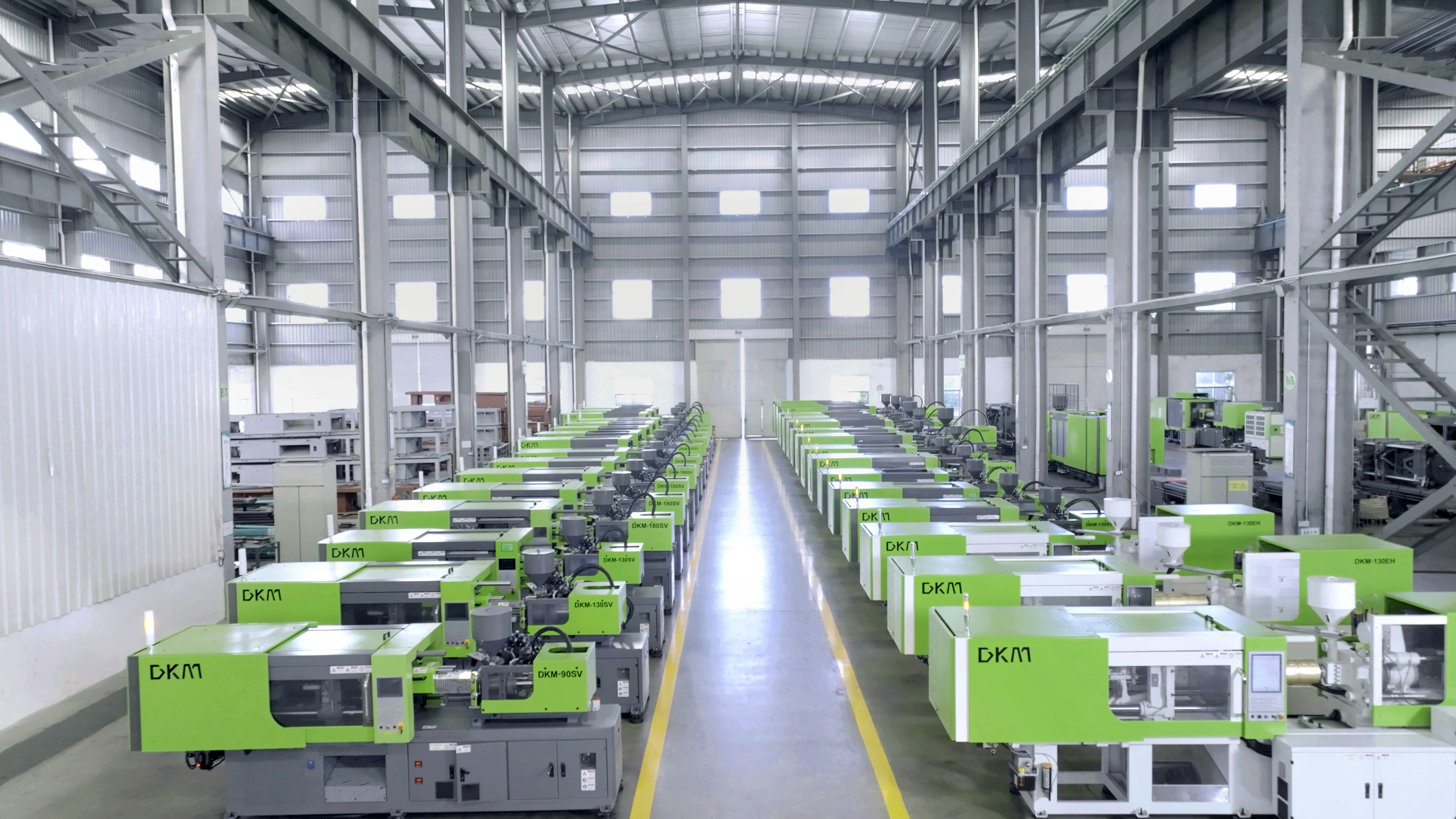
The practical output of this layout approach can be seen in the 8-Cavity Thin-Wall IML Intelligent Cup Production Line, which pairs a DKM-360DFS high-speed machine with a high-speed IVI-IML robot and an 8-cavity thin-wall cup mold at 0.35mm thickness and a cavity height of 120mm, achieving a 5.5-second cycle time. Other configurations within the same line architecture include a DKM-360DFS unit producing 500–1000ml PP/PS tea and drink cups on an 8-cavity thin-wall mold at a 6-second cycle, and a DKM-310DFS unit on a 4-cavity IML mold producing yogurt cups at a 5.3- to 5.8-second cycle. These figures illustrate how the same layout principles — DFS machine, synchronized mold, in-mold labeling robot, and tight thermal control — translate across different cavity counts and container formats while maintaining a yield rate of ≥99%.
Why the Layout Matters for Thin-Wall Producers
For a packaging operation evaluating equipment for food containers, cups, yogurt boxes, paint buckets, or disposable products, the layout question is rarely about any single machine specification. It is about whether the injection unit, mold, and labeling robot have been engineered together and proven through joint commissioning before shipment. DKM and SINO MOULD, working jointly with IVI ROBOT, deliver these thin-wall and IML lines as a turnkey package with one customer interface spanning mold design, machine selection, robot integration, and process training, and thin-wall IML molds are made available with qualified delivery within one month. This turnkey structure is the practical reason the line layout performs as a single system rather than a set of independently sourced components, giving thin-wall packaging producers a dependable path toward shorter cycle times, consistent part dimensions, and permanent label integration without added labor steps.
https://dkm.com/dfs-low-inertia-high-speed-machine/
DKM Machinery